
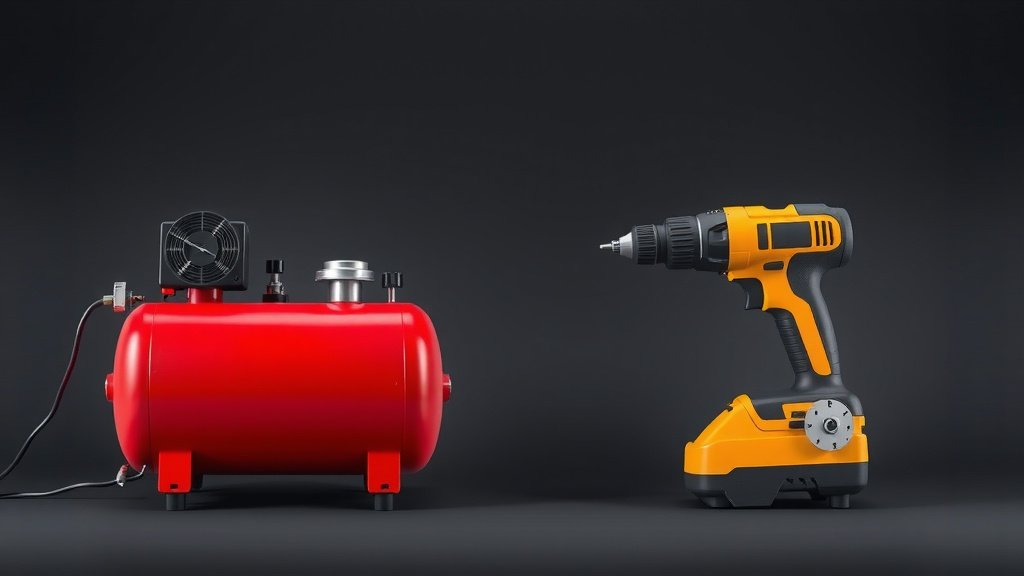
Air Compressor vs Electric Tools: Which is Right for You
When choosing between air compressor tools and their electric counterparts, the decision often boils down to power needs and portability. For heavy-duty tasks requiring immense force, like framing a house or sandblasting, an air compressor system is typically the superior choice due to its raw power output. Electric tools, on the other hand, are generally more convenient for lighter jobs or when you need to move around frequently without lugging a compressor.
You might be wondering which type will better suit your specific projects. While electric tools offer plug-and-play simplicity, air-powered tools boast a reputation for durability and sustained performance under demanding conditions. Understanding these core differences helps you make an informed decision for your workshop or job site, saving you time and frustration down the line.
- Air compressors excel at high-power, continuous tasks.
- Electric tools are often lighter and easier to move.
- Consider your project’s power demands and portability needs.
- Both have their place in a DIYer’s or professional’s toolkit.
Let’s dive into the specifics of air compressor tools versus electric tools so you can pick the best option for your needs.
Comparing Air Compressor Tools and Electric Options
Choosing the right tool for the job often comes down to deciding between the power of compressed air and the convenience of electricity. We’ve found that both systems have their unique strengths and weaknesses. Understanding these differences will help you avoid frustration and get your projects done right. So, let’s break down what makes each one tick.
The Power Behind the Punch: Air Compressors Explained
Air compressors work by taking in ambient air, compressing it, and storing it in a tank. This stored energy is then released through a hose to power various air tools. Think of it like a highly pressurized water bottle; when you open it, the water rushes out with force. This system delivers consistent, high-pressure air to your tools.
How They Deliver That Raw Muscle
The magic happens in the compressor unit itself. A motor drives a pump, which squeezes air into the tank. The bigger the tank and the more powerful the motor, the more air you can store and the longer you can run tools before the compressor needs to “catch up.” This sustained power delivery is why many professionals lean on air tools for demanding tasks.
What Kind of Tools Use Air?
You’ll find a wide array of tools that run on compressed air. These include:
- Nail guns and staplers for construction and upholstery.
- Impact wrenches for automotive work.
- Sanders and grinders for surface preparation.
- Paint sprayers for a flawless finish.
- Air hammers for demolition.
The Convenience of Corded and Cordless Electric Tools
Electric tools, as you probably know, run directly from an electrical outlet or a battery pack. They are the go-to for many DIYers because of their simplicity and accessibility. Just plug it in or pop in a charged battery, and you’re ready to go.
Plug-and-Play Simplicity
The biggest draw for electric tools is their ease of use. You don’t need an air compressor, extra hoses, or special fittings. For tasks around the house, like hanging shelves or assembling furniture, an electric drill or screwdriver is incredibly straightforward. Many modern electric tools are also surprisingly powerful.
Battery-Powered Freedom
The rise of cordless technology has been a game-changer. Lithium-ion batteries provide ample power and run time for most common tasks. This cordless freedom means you can take your tools anywhere, whether it’s the backyard, a remote cabin, or just across the garage, without being tethered to an outlet or a noisy compressor.
Types of Electric Tools You’ll Find
The electric tool market is vast and constantly growing. You can find:
- Drills and drivers for everyday fastening and drilling.
- Saws like circular saws, jigsaws, and reciprocating saws for cutting.
- Sanders for smoothing surfaces.
- Angle grinders for cutting and grinding metal.
- Heat guns for stripping paint or shrinking tubing.
Key Differences: When to Choose Which
The decision between air and electric often hinges on a few critical factors. We’ve seen that power, portability, cost, and the type of work you do all play a big role.
Power Delivery and Sustainment
When it comes to sheer, unadulterated power for continuous use, air compressors often win. For applications like sandblasting or running a framing nailer all day, an air system can provide consistent force. Electric tools can deliver a lot of power for short bursts, but prolonged heavy use can drain batteries quickly or strain a corded tool’s motor. Many sources suggest that for heavy-duty, repetitive tasks, air tools are generally more robust.
Portability and Convenience
If you need to move around a lot or work in tight spaces, electric tools usually have the edge. No hoses means no tangles and quicker setup. Cordless electric tools offer ultimate freedom. Air tools require lugging the compressor, which can be heavy and bulky, plus managing air hoses. For quick fixes or jobs where mobility is key, electric is often the more practical choice. It’s about grab-and-go accessibility.
Cost Considerations
The initial investment can be tricky. A good quality air compressor and a set of air tools can be quite expensive. However, individual air tools themselves are sometimes cheaper than their high-end electric equivalents. Once you have the compressor, adding more air tools might be more budget-friendly. Electric tools have a lower entry cost for basic models, but top-tier cordless systems with multiple batteries and chargers can also add up. We found that long-term costs depend heavily on how often and how intensely you’ll use the tools.
Noise and Vibration
Air compressors can be quite loud, especially larger models. This might necessitate hearing protection. Air tools themselves often vibrate less than electric versions, which can reduce user fatigue. Electric tools vary greatly in noise and vibration levels. Some high-powered electric tools can be quite noisy and produce noticeable vibrations.
Maintenance and Lifespan
Air tools are often praised for their durability and longer lifespan. Because the motor and heavy components are separate, the tools themselves can be simpler and more robust. They typically require less maintenance beyond occasional oiling and cleaning. Electric tools, especially battery-powered ones, have components like motors and batteries that can wear out over time. Battery replacement can be a significant ongoing cost.
Making the Right Choice for Your Projects
So, how do you decide? Think about the projects you tackle most often. Are you building a deck, renovating your garage, or just doing minor home repairs?
When Air Tools Shine Brightest
You’ll likely benefit most from an air compressor system if you:
- Perform frequent, heavy-duty tasks like framing, roofing, or automotive repair.
- Need sustained power for extended periods.
- Value the lighter weight and reduced vibration in your hand tools.
- Are comfortable with the setup and maintenance of a compressor system.
When Electric Tools Take the Crown
Electric tools are probably your best bet if you:
- Prioritize convenience and quick setup.
- Work in various locations and need maximum portability.
- Handle a mix of light to medium-duty tasks.
- Prefer a simpler, more plug-and-play experience.
- Are on a tighter initial budget for basic tools.
A Handy Comparison Table
To help you visualize the differences, here’s a quick rundown:
| Feature | Air Compressor Tools | Electric Tools |
|---|---|---|
| Power Output | Very High, Consistent | Good to High, Variable |
| Portability | Lower (requires compressor) | Higher (especially cordless) |
| Setup Time | Slower (compressor, hose) | Faster (plug in or battery) |
| Tool Weight | Lighter (motor separate) | Heavier (motor integrated) |
| Durability/Lifespan | Generally Higher | Variable, battery life a factor |
| Initial Cost | Higher (compressor + tools) | Lower to Moderate (tool only) |
| Noise Level | Compressor loud, tool less so | Variable, can be loud |
Your Tool Kit Checklist
Before you invest, ask yourself these quick questions:
- What’s the primary type of work you do?
- How often will you use these tools?
- Do you need to move your tools frequently?
- What is your budget for tools and accessories?
- Do you have a dedicated space for a compressor?
- Is power consistency or instant convenience more important for your projects?
Conclusion
You’ve seen how air compressors deliver raw, sustained power for demanding jobs, while electric tools offer unmatched convenience and portability for everyday tasks. We found that your project needs are the ultimate deciding factor. For heavy-duty construction or long-duration work, air systems often prove their worth through durability and consistent force. For quick fixes and mobility around the home or workshop, electric tools are hard to beat. Consider your primary use cases and budget. Your next step is to assess your project demands and choose the system that best fits your workflow, ensuring you have the right power and convenience at your fingertips.
Frequently Asked Questions
Can I use air tools without a massive compressor?
For very light tasks, some smaller, portable air compressors are available. However, most serious air tools require a compressor with a decent tank size and airflow. If portability is your absolute top priority, electric tools might be a better fit.
Are air tools really more durable than electric tools?
Many users report that air tools tend to last longer. This is because the motor and heavy components are part of the compressor, not the handheld tool itself. This design often makes air tools simpler and more robust.
How much louder is an air compressor compared to an electric tool?
The compressor unit itself can be quite loud, often requiring hearing protection. The air tools connected to it, however, are typically quieter than their electric counterparts because the noisy motor is separate.
What’s the biggest advantage of cordless electric tools?
The main benefit of cordless electric tools is absolute freedom of movement. You aren’t tethered to an air hose or an electrical outlet, making setup incredibly fast and allowing you to work anywhere.
Can electric tools handle the same tough jobs as air tools?
For short bursts, many high-powered electric tools can compete. However, for continuous, heavy-duty applications like extensive framing or sandblasting, air compressor systems generally provide more consistent and sustainable power over long periods.
Similar Posts
How Many Watts Does Your Air Compressor Need
The wattage an air compressor needs depends entirely on the tool you’re powering. For most DIY jobs, like inflating tires or using small nail guns, a compressor between 1 to 6 horsepower (HP) is usually enough. Higher HP models are needed for more demanding tasks like powering impact wrenches or spray painting. Understanding compressor power…
Teromas Air Compressor: Your How-To Guide
To use your Torumas air compressor effectively, you’ll first want to connect your air hose and tools. Then, check the oil level and tank pressure before turning it on. Finally, adjust the regulator to your tool’s needs for optimal performance. It’s that straightforward! Air compressors are super useful for many tasks, from inflating tires to…
Air Compressor Replacement Cost: What You Need to Know
Replacing an air compressor typically costs between $500 and $2,500, depending on the type, size, and brand you choose. Smaller, portable compressors are generally less expensive, while larger, stationary units can be a much bigger investment. The labor costs for installation can also add a substantial amount to the total. When you’re facing a broken…
Oil-Free Air Compressor Lifespan: What to Expect
Generally, oil-free air compressors can last anywhere from 5 to 10 years. The actual lifespan depends heavily on how well you maintain them and how often you use them. We found that proper care can significantly extend their operational life. While they don’t require oil changes, these compressors still need regular attention. Things like keeping…
10 Must-Have Air Compressor Accessories for Any Workshop
The best air compressor accessories are tire inflators, air hoses, and air tool kits, chosen for their ability to enhance efficiency, improve accuracy, and expand the versatility of your air compressor. Standout picks include AstroAI Digital Tire, AZUNO Digital Tire, and FYPower 18 Pieces Air. These essential add-ons can transform a basic compressor into a…
10 Best Air Compressors for Winterizing Your RV
The best air compressors for winterizing your RV, boat, or sprinkler system are those offering reliable airflow, portability, and ease of use for tasks like blowing out water lines. Standout picks include DEWALT Tire Inflator, RyanTek 15 Gallon Compressor, and Limodot 5 Gallon Compressor. For most homeowners, a compact and quiet unit like the Limodot…