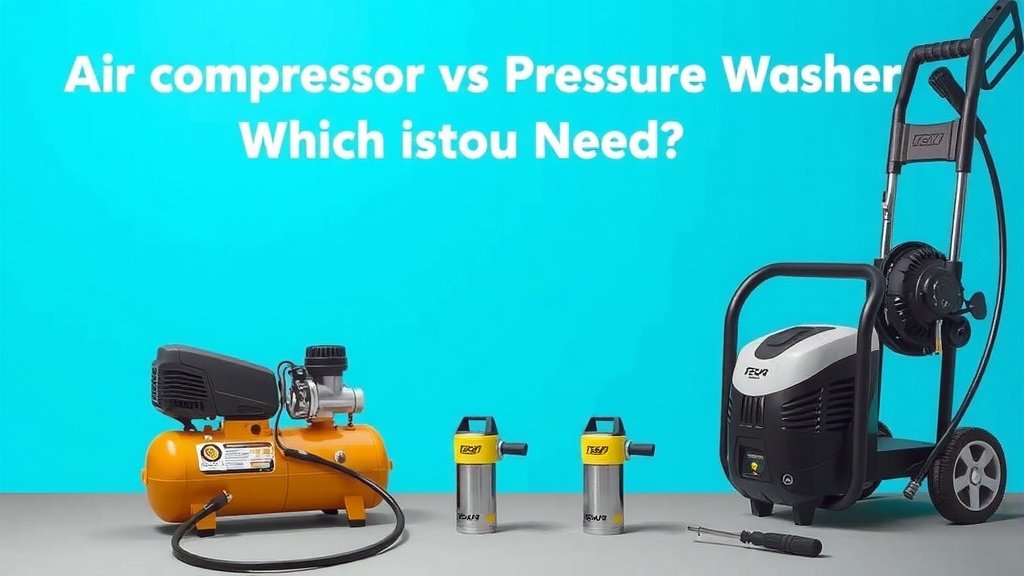
Air Compressor vs Pressure Washer: Which Do You Need
Choosing between an air compressor and a pressure washer depends entirely on your task. An air compressor uses compressed air for tasks like inflating tires or running tools, while a pressure washer uses high-pressure water to clean surfaces. For cleaning grime, a pressure washer is your best bet, but for powering tools, you’ll need an air compressor.
Think of it this way: one blasts with air, the other with water. While both generate power, their applications are worlds apart. We found that understanding their core function is key to picking the right machine for your garage or workshop needs, preventing costly mistakes and saving you time.
- Air compressors use compressed air for tools and inflation.
- Pressure washers use high-pressure water for cleaning.
- They serve very different purposes.
- Choose based on whether you need to clean or power something.
Below, we’ll break down exactly what each machine does, how they work, and the best jobs for each, so you can make the most informed decision for your projects.
Air Compressor Versus Pressure Washer: What’s the Difference?
It can be confusing to figure out what’s what when you’re looking at tools for your home projects. Both an air compressor and a pressure washer sound powerful. They both make noise and get things done. But how do you know which one you need? You might be surprised to learn they’re built for completely different jobs.
We found that the biggest difference comes down to what they expel. One blasts with compressed air, and the other sprays with high-pressure water. Knowing this simple fact will help you choose the right tool. Let’s break down what each one does so you can stop wondering and start working.
Understanding the Air Compressor: Powering Your Tools
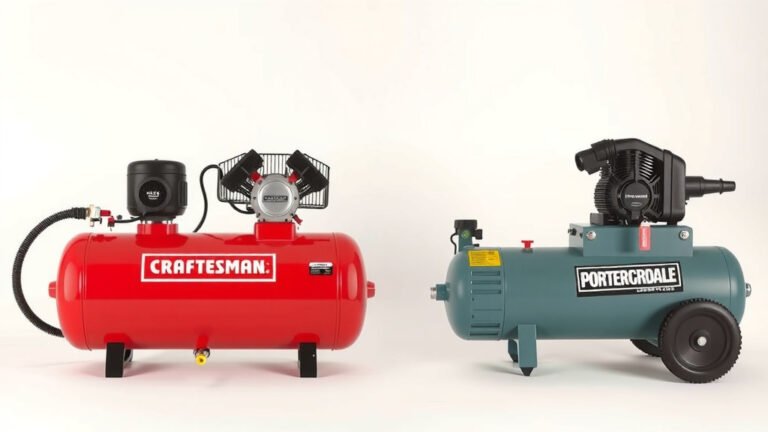
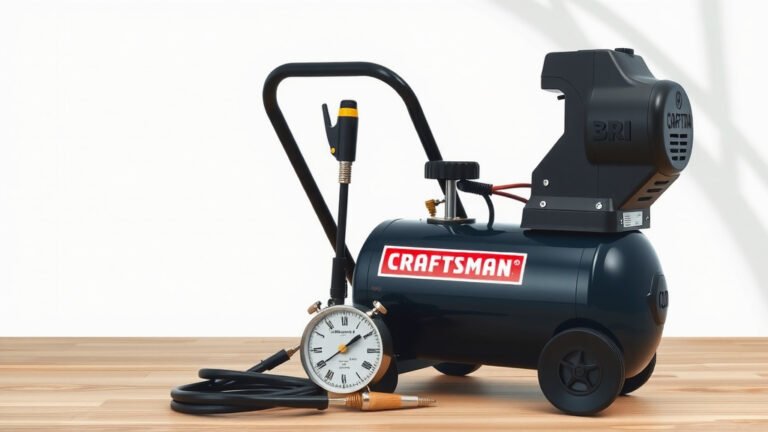
An air compressor is like a portable air pump on steroids. It takes in regular air, compresses it, and stores it in a tank. Then, it releases that stored air under pressure. Think of it as a powerful bellows, ready to push air when you need it.
We found that air compressors are primarily used to power pneumatic tools. These are tools that run on compressed air instead of electricity or gas. They can be lighter and more durable than their electric counterparts. The air also provides a cushion, which can reduce vibration for the user.
How Does an Air Compressor Work?
At its core, an air compressor has a motor that drives a pump. This pump draws air into a cylinder. A piston or screw mechanism then squeezes this air into a smaller volume. This process increases the air’s pressure. The compressed air is then stored in a holding tank until you need it.
When you connect a pneumatic tool, a valve opens. The pressurized air rushes out of the tank and into the tool. This flow of air makes things like nail guns fire or impact wrenches turn. We found that the PSI (pounds per square inch) and CFM (cubic feet per minute) ratings tell you how much power and air volume the compressor can deliver.
What Can You Do with an Air Compressor?
Air compressors are incredibly versatile. They are excellent for tasks that require consistent, controlled bursts of air pressure. Many homeowners and DIYers use them for a variety of projects around the house and garage.
Inflating Tires and Sports Equipment
This is a common use for smaller air compressors. They can quickly and easily inflate car tires, bicycle tires, and sports balls. It’s much faster and more efficient than a manual pump. We found that keeping your tires properly inflated can improve fuel economy and tire life (U.S. Department of Energy).
Running Power Tools
This is where air compressors really shine. They are essential for operating tools like:
- Nail guns: Perfect for framing, trim work, and upholstery projects.
- Impact wrenches: Great for loosening stubborn bolts on cars or machinery.
- Air sanders and grinders: Efficient for smoothing surfaces or removing rust.
- Paint sprayers: Achieve a smooth, professional finish when painting furniture or walls.
Many experts say that pneumatic tools often have more torque and can run longer without overheating compared to electric models. This is a big plus for intensive projects.
Cleaning and Dusting
You can attach various nozzles to an air compressor to blow away dust and debris. This is fantastic for cleaning out workshops, engines, computer keyboards, or tight corners in your house. We found that it’s a great way to remove stubborn dirt without using water.
Exploring the Pressure Washer: Your Cleaning Powerhouse
A pressure washer is designed for one main purpose: cleaning. It uses a high-powered stream of water to blast away dirt, grime, mold, and mildew from surfaces. Think of it as a super-soaker for grown-ups, but with a much more serious job.
We found that pressure washers are ideal for tackling tough cleaning jobs on the exterior of your home or vehicles. They can make dull surfaces look new again. The key is the sheer force of the water, measured in PSI and GPM (gallons per minute). This force can remove built-up residue and stains.
How Does a Pressure Washer Work?
Pressure washers use a motor (electric or gas) connected to a pump. The pump draws water from a hose and then pressurizes it dramatically. This high-pressure water is then forced through a narrow nozzle. The nozzle further concentrates the water stream, creating a powerful jet.
We found that the PSI rating tells you the force of the water spray. The GPM rating indicates how much water is used. Higher PSI means more cleaning power. Higher GPM means faster cleaning because more water is being applied. You can also adjust the spray pattern by changing the nozzle. A wider spray is gentler, while a narrower spray is more intense.
What Can You Do with a Pressure Washer?
Pressure washers excel at cleaning large outdoor surfaces and tough messes. If you have something grimy that needs a serious scrub, this is likely your tool. We’ve seen them transform homes and vehicles.
Cleaning Decks, Patios, and Driveways
Years of dirt, algae, and oil stains can accumulate on these surfaces. A pressure washer can strip them away, restoring your outdoor living spaces. Many homeowners find this a game-changer for curb appeal.
Washing Cars, Boats, and RVs
Getting rid of mud, salt, and road grime is a breeze. You can wash your vehicles quickly and effectively. Be sure to use the right nozzle and distance to avoid damaging paint or delicate parts. Many car enthusiasts swear by them for a showroom shine.
Removing Mold and Mildew
From siding and fences to outdoor furniture, mold and mildew can be persistent problems. Pressure washing can blast them away. It’s important to use the right pressure and consider using a cleaning solution for the best results. Experts suggest that regular cleaning can prevent long-term damage to surfaces (Environmental Protection Agency).
Cleaning Gutters and Siding
Dirty siding can make your house look run-down. Pressure washers can clean it effectively. They can also help clear out gutters filled with leaves and debris. Just be careful when working at heights. Always prioritize safety first.
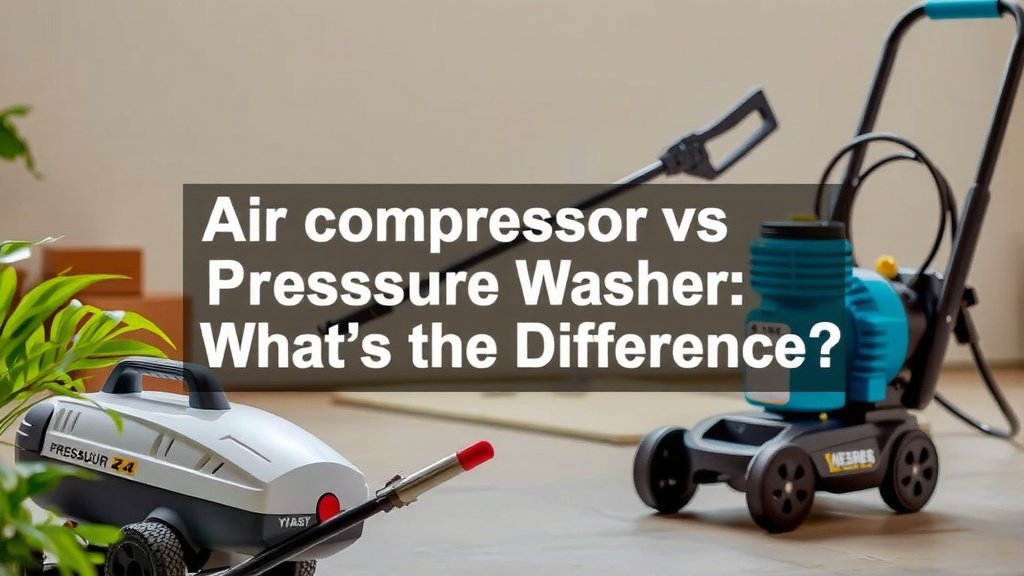
Air Compressor vs. Pressure Washer: Key Differences at a Glance
To make it super clear, let’s look at the main distinctions side-by-side. We found that understanding these points helps prevent confusion.
| Feature | Air Compressor | Pressure Washer |
|---|---|---|
| Primary Use | Powering tools, inflating | Cleaning surfaces |
| Medium Used | Compressed Air | High-Pressure Water |
| Best For | DIY projects, auto repair, woodworking | Outdoor cleaning, vehicle washing |
| Output | Airflow (CFM), Pressure (PSI) | Water Flow (GPM), Pressure (PSI) |
| Can it Clean? | Yes, for dusting/blowing debris | Yes, for deep cleaning grime |
| Can it Power Tools? | Yes, pneumatic tools | No |
Making Your Choice: Which Machine is Right for You?
So, how do you decide? It really boils down to what you plan to do. Think about your current projects and what you might want to tackle in the future. We found that most people need one or the other, but rarely both for the same primary purpose.
If your goal is to inflate tires, run nail guns for a DIY woodworking project, or work on your car with impact wrenches, an air compressor is your tool. It provides the power source for specialized equipment. You can certainly use it to blow dust off surfaces, which is a form of cleaning, but it’s not its main strength.
On the other hand, if you’re looking to make your dirty patio sparkle, wash away mud from your car, or get rid of that stubborn green gunk on your house siding, a pressure washer is what you need. It’s designed to blast away dirt and grime with water. It can’t power a nail gun, no matter how hard you try!
Quick Checklist for Your Decision
To help you finalize your choice, ask yourself these quick questions:
- Do I need to inflate tires or sports equipment regularly?
- Do I own or plan to buy pneumatic (air-powered) tools?
- Is my primary goal to clean outdoor surfaces like driveways or siding?
- Do I need to wash my car, boat, or RV more effectively?
- Am I looking for a tool to remove tough dirt, mold, or grime?
Conclusion
You’ve now seen how air compressors and pressure washers are distinct tools for different jobs. An air compressor is your go-to for powering pneumatic tools and inflation needs. Think nail guns, impact wrenches, and topping off your tires. A pressure washer, on the other hand, is your cleaning champion for tackling grime on decks, cars, and siding. We found that matching the tool to the task prevents frustration and ensures you get the best results. Decide if you need to power something or clean something, and you’ll confidently pick the right machine for your projects.
Frequently Asked Questions
Can I use an air compressor to wash my car?
While you can use an air compressor to blow dust and debris off your car, it won’t effectively clean dirt, grime, or salt. Pressure washers are specifically designed with high-pressure water jets to remove these tough stains. An air compressor is more for pre-cleaning or drying.
Which is better for cleaning siding: an air compressor or a pressure washer?
A pressure washer is significantly better for cleaning siding. Its high-pressure water stream can blast away mold, mildew, and accumulated dirt that an air compressor cannot remove. Always use the appropriate nozzle and pressure setting to avoid damaging the siding.
Can a pressure washer power tools like a nail gun?
No, a pressure washer cannot power tools like a nail gun. Pressure washers expel water under high pressure, whereas pneumatic tools like nail guns require a consistent flow of compressed air. They serve entirely different functions.
Are air compressors good for removing rust?
Air compressors can help with rust removal by powering tools like wire brushes or sanders. These tools, driven by compressed air, can efficiently strip away rust from metal surfaces. However, the compressor itself doesn’t remove rust; it powers the tool that does.
How do I choose the right PSI for pressure washing my driveway?
For most driveways, a pressure washer with 2000-3000 PSI is usually sufficient to remove dirt, oil, and grime effectively. We found that concrete can withstand higher pressures, but always start with a wider nozzle and lower pressure to avoid etching the surface. Test a small, inconspicuous area first.