How Air Compressors Work: The Science of Air Intake
An air compressor gets air by drawing it from the surrounding atmosphere into a compression chamber. A piston or other mechanism then squeezes this air into a smaller volume. This process greatly increases the air’s pressure, making it ready for use in tools and equipment. Think of it like a bicycle pump, but on a much larger and more powerful scale.
You might be wondering what happens to the air as it’s being compressed. As the air is squeezed, its temperature also rises quite a bit. Many compressors use cooling systems to manage this heat. This fundamental principle of drawing in and then compressing ambient air is how virtually all air compressors work to build up that useful pressure you need.
- Air compressors suck air from the outside.
- A piston or similar part squeezes the air.
- This makes the air’s pressure go up a lot.
- The air also gets hotter during this process.
- This pressurized air powers your tools.
So, how exactly does this magic happen inside? Let’s walk through the common steps involved in getting air into your compressor tank, ready for action.
Understanding How Air Compressors Capture Air
An air compressor’s main job is to take the regular air around you and make it much more powerful. It does this by squeezing that air into a smaller space. This process boosts the air’s pressure dramatically. This high-pressure air is what drives your tools. So, how does it actually grab that air from your shop or garage?
The Intake Process: Drawing in Ambient Air
Every air compressor starts by pulling in air from its surroundings. Think of it like your lungs breathing in. The compressor has an inlet port, usually at the top or side. This is where the magic begins. Ambient air, the same air you’re breathing right now, is drawn into the machine.
The Role of the Inlet Valve
Once the air reaches the inlet port, it passes through an inlet valve. This valve is like a one-way door. It lets air in but stops it from escaping back out. When the compressor’s mechanism starts its cycle, it creates a low-pressure area. This difference in pressure pulls the outside air through the open inlet valve.
Filtration: Keeping the Air Clean
Before the air even gets to the main compression part, it almost always goes through an air filter. This is super important! Your shop air might have dust, dirt, or other tiny particles floating in it. If these get inside the compressor, they can cause damage. The filter acts like a sieve, catching these unwanted bits.
We found that most manufacturers use paper or foam filters for this job. They’re designed to let air pass through easily while trapping solids. Keeping this filter clean is one of the easiest maintenance tasks you can do. A clogged filter means less air gets in, making your compressor work harder.
Compression Methods: Squeezing the Air
After the air is filtered, it enters the compression stage. This is where the air’s volume is reduced, and its pressure is built up. There are a few common ways compressors achieve this. The most widespread type uses a piston, much like a car engine.
Piston Compressors: The Most Common Type
In a piston compressor, a motor turns a crankshaft. This crankshaft moves a piston up and down inside a cylinder. As the piston moves down, it creates a vacuum. This vacuum pulls air in through the inlet valve. Then, as the piston moves up, it pushes the air into a smaller space.
This squeezing action increases the air pressure significantly. For smaller compressors, this might happen in a single step. But for larger, more powerful units, there can be multiple cylinders. These are called multi-stage compressors. They compress the air a bit in the first cylinder, then send it to another cylinder for further compression.
Single-Stage vs. Multi-Stage Compression
Single-stage compressors are simpler. They do all the compressing in one go. You’ll find these in many home garages. Multi-stage compressors are more efficient for higher pressures. They take the air through several stages of compression. This method helps manage the heat generated, too. Many experts say multi-stage is better for tools that need very high pressure.
Rotary Screw Compressors: For Industrial Needs
Another popular type, especially in industrial settings, is the rotary screw compressor. Instead of pistons, these use two interlocking rotating screws. As the screws turn, they trap air in the space between them. They then move this trapped air along the length of the screws.
The design of the screws forces the air into progressively smaller volumes. This continuous squeezing action builds up high pressure. Rotary screw compressors are known for their continuous air delivery. They don’t have the start-stop cycles of piston compressors. This makes them ideal for applications requiring a constant supply of compressed air.
Other Compression Technologies
While pistons and rotary screws are most common, other types exist. Some small, portable compressors use diaphragm mechanisms. These use a flexible diaphragm that moves to compress the air. There are also centrifugal compressors, which use rotating impellers to accelerate air and then slow it down to increase pressure. These are usually for very large industrial applications.
Managing Heat and Pressure Build-Up
As you can imagine, squeezing air makes it hot. This is a fundamental law of physics. As air is compressed, its temperature can rise dramatically. This heat needs to be managed. If the air gets too hot, it can damage the compressor’s components. It also reduces the efficiency of the compression process.
Cooling Systems in Compressors
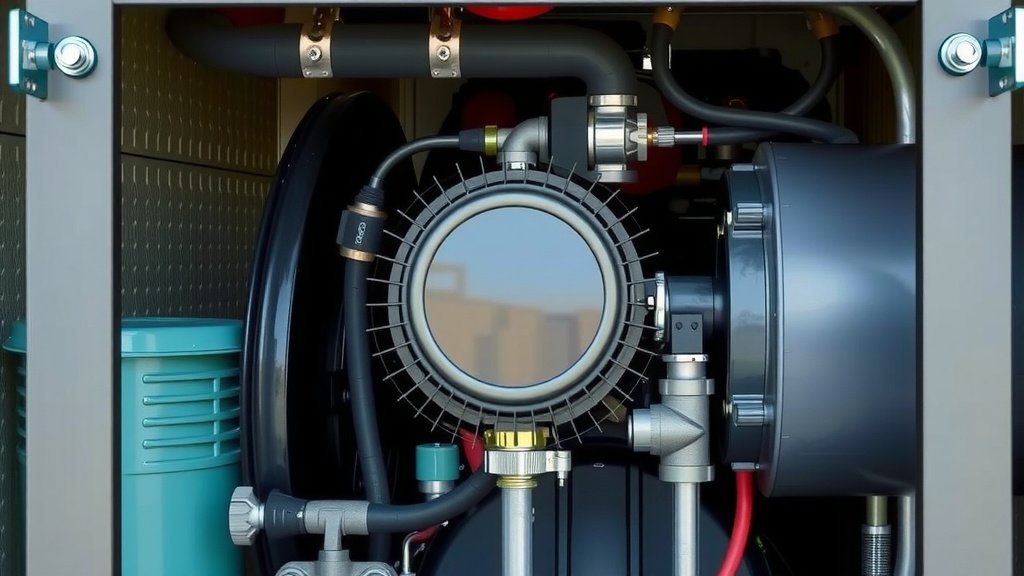
Most air compressors have some form of cooling system. Many smaller compressors use ambient air to cool the cylinder and head. You might see fins on the outside of these parts to increase the surface area for cooling. Larger compressors often have dedicated cooling fans.
Some multi-stage compressors use intercoolers. These are heat exchangers placed between the compression stages. They cool the air down after it leaves one cylinder but before it enters the next. This makes the subsequent compression stages more effective. We found that effective cooling is key to a compressor’s longevity and performance.
Pressure Regulation and Storage
Once the air is compressed, it needs to be stored. This is where the tank comes in. The high-pressure air is directed into the storage tank. A pressure switch on the tank monitors the air pressure inside. When the pressure reaches a set maximum level, the switch turns off the compressor motor.
When you use the air, the pressure in the tank drops. Once it falls to a certain minimum level, the pressure switch turns the motor back on. This cycle ensures you have a ready supply of compressed air without constant running. An external regulator can then be used to set the desired working pressure for your tools.
Here’s a quick rundown of the journey air takes:
- Air enters through an intake port.
- It passes through an air filter to remove debris.
- A piston or rotating screws compress the air.
- The air’s pressure and temperature increase.
- Cooling systems manage the heat.
- The compressed air is stored in a tank.
- A pressure switch controls when the compressor runs.
Conclusion
You’ve learned that your air compressor works by simply breathing in the air around you. It then uses clever mechanics, like pistons or screws, to squeeze that air down. This process builds pressure and temperature, managed by cooling systems. Finally, this powerful air is stored, ready to power your tools efficiently. Remember to keep that air filter clean!
Taking care of your air filter is a small step that makes a big difference in performance and the lifespan of your compressor. Now you know the journey air takes inside your machine!
Frequently Asked Questions
Why does my air compressor intake sound like it’s struggling?
This often happens when the air filter is clogged. A dirty filter restricts airflow, making the compressor work harder to pull air in. You might also hear unusual noises if there’s an issue with the inlet valve not opening properly. Cleaning or replacing the filter should resolve this.
Can I connect my air compressor directly to a hose without a tank?
While some small compressors are designed for direct connection, most home and shop units rely on a tank. The tank stores compressed air, providing a buffer and smoothing out the airflow. Without a tank, the compressor would cycle on and off constantly, potentially causing damage and inconsistent pressure for your tools.
Does the temperature of the air outside affect how my compressor works?
Yes, it can. On very hot days, the air going into your compressor is already warmer and less dense. This means the compressor might have to work harder and might not reach its maximum pressure as quickly. Conversely, cooler air is denser, which can make compression slightly more efficient.
What happens if the air filter is completely blocked?
If an air filter is completely blocked, your air compressor won’t be able to draw in any air. This means it won’t be able to compress anything. The compressor might overheat trying to work against zero airflow, or it could shut down as a safety measure. It’s essential to check and clean your air filter regularly.
Are there any types of compressors that don’t use a piston?
Yes, absolutely. While piston compressors are common for home use, industrial settings often use rotary screw compressors. These have two intermeshing screws that trap and compress air as they rotate. Other types, like diaphragm or centrifugal compressors, use different mechanisms to achieve compression for specific applications.