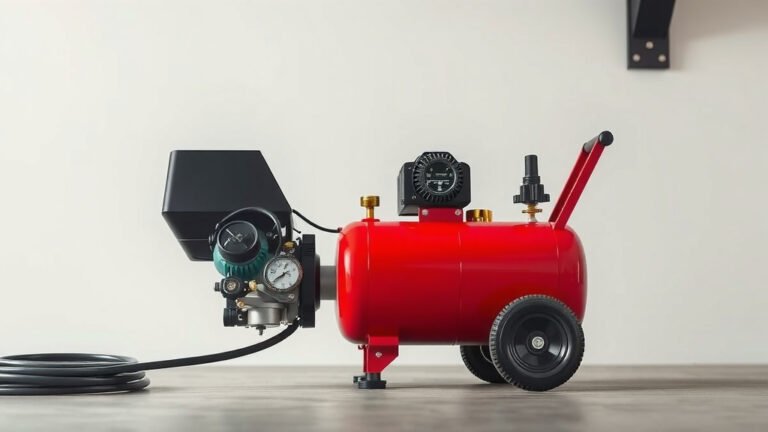
Boost Air Compressor Pressure: A Simple Guide
To increase your air compressor pressure, you’ll want to check and adjust the regulator, ensure the tank isn’t leaking, and verify your compressor is sized correctly for the job. Often, low pressure is due to simple settings or minor air leaks that are easy to fix.
Many common issues can cause a compressor to underperform. We found that understanding these factors helps maintain optimal performance. It’s about making sure all the components are working together efficiently to deliver the air you need.
- Check the pressure regulator first.
- Inspect for any air leaks in hoses or fittings.
- Make sure your compressor is the right size.
- Consider the duty cycle of your compressor.
Below, we’ll walk you through the most effective ways to get your air compressor delivering the pressure you expect, step by step.
Troubleshooting Low Air Compressor Pressure
If your air compressor isn’t delivering the pressure you need, don’t despair. We found that most low-pressure issues stem from a few common culprits. Getting your compressor back to peak performance is often simpler than you think. Let’s dive into the most likely reasons for a weak output and how you can fix them.
Checking and Adjusting the Pressure Regulator
The pressure regulator is your compressor’s best friend for maintaining consistent output. It essentially controls how much air gets to your tools. Think of it like the volume knob on a stereo; too low, and you won’t hear much. Too high, and you might damage something.
What is a Pressure Regulator?
Your regulator takes the high-pressure air from the compressor’s tank and dials it down to a usable level. This prevents your tools from being blasted with too much force. It’s a small but mighty component ensuring safety and efficiency.
How to Adjust Your Regulator
Most regulators have a knob or a dial on top. To increase the pressure, you’ll typically turn this knob clockwise. For lower pressure, turn it counter-clockwise.
Start by turning the knob a little at a time. We found that small adjustments work best. After each turn, let the compressor catch up. Check the gauge to see the new pressure reading. You want to match the pressure your tool requires. Consult your tool’s manual for the exact setting. Getting this wrong can lead to poor performance or even damage.
Signs Your Regulator Might Be Faulty
Sometimes, even with adjustments, the pressure won’t change. This could mean the regulator itself has a problem. If you turn the knob and see no difference on the gauge, or if the pressure fluctuates wildly, it might be time to inspect or replace the regulator. We found that worn-out diaphragms or seals inside the regulator are common failure points. Many repair guides suggest checking these parts if pressure issues persist after simple adjustments.
Inspecting for Air Leaks
Air leaks are like tiny holes in a bucket; they constantly drain your resources. Even a small leak can significantly reduce your compressor’s effective pressure. You might not even hear them if they’re very small.
Where to Look for Leaks
Common leak spots include:
- Hoses and Fittings: Check all connections where hoses meet the compressor or your tools.
- Couplers: The quick-connect fittings where you attach air tools can develop leaks.
- Valves: The drain valve at the bottom of the tank and the check valve near the pump are potential leak sources.
- The Tank Itself: Though less common, a tiny pinhole in the tank can cause air loss.
How to Find Leaks
The easiest way to find air leaks is with soapy water. Mix a solution of dish soap and water in a spray bottle.
With the compressor turned on and pressurized, spray the soapy water over all the potential leak spots. If you see tiny bubbles forming, that’s where your air is escaping. You’ll want to address these leaks immediately. We found that tightening fittings is often all that’s needed. For more stubborn leaks, you might need to replace a worn gasket or fitting.
The Impact of Leaks
A steady hiss means a steady loss of pressure. This forces your compressor to run more often. It uses more electricity and puts extra wear on the pump. Fixing leaks means your compressor can reach and maintain its set pressure more easily. It’s a **direct way to boost performance** without touching a single dial.
Ensuring Your Compressor is Sized Correctly
Sometimes, the issue isn’t with the compressor’s settings or leaks, but with the compressor itself. Is it powerful enough for the job you’re asking it to do?
Understanding CFM and PSI
Air compressors are rated in two main ways: PSI (pounds per square inch) and CFM (cubic feet per minute). PSI is the pressure, like the force of water from a hose. CFM is the volume of air the compressor can deliver. Many tools require a certain CFM at a specific PSI to operate correctly.
Matching Tools to Compressor Capacity
If you’re using a tool that requires a high CFM, but your compressor can only deliver a low CFM, you’ll experience pressure drops. The compressor simply can’t keep up with the demand. We found that under-specced compressors often struggle with continuous use. They might perform okay for short bursts but falter under sustained operation.
Before buying or using a tool, check its manual for its CFM and PSI requirements. Then, check your compressor’s specifications. If there’s a mismatch, you’ll need a larger compressor for that tool. It’s like trying to fill a swimming pool with a garden hose; it’ll take forever, if it ever gets filled at all.
Considering the Compressor’s Duty Cycle
Beyond just raw power, a compressor’s duty cycle is critical for sustained performance. Duty cycle tells you how long a compressor can run within a 10-minute period before needing to cool down.
What is Duty Cycle?
A compressor with a 50% duty cycle, for example, can run for 5 minutes out of every 10. A 100% duty cycle means it can run continuously. Most smaller, portable compressors have lower duty cycles. Larger, industrial units often have 100% duty cycles.
How Duty Cycle Affects Pressure
If your task requires the compressor to run for longer than its duty cycle allows, the pump will overheat and shut off. When it restarts after cooling, you’ll experience a significant drop in pressure until it’s ready again. If you need continuous airflow for extended periods, you need a compressor with a higher duty cycle. We found that ignoring duty cycle is a common pitfall for DIYers tackling longer projects.
Basic Checklist for Pressure Issues
Here’s a quick rundown to get your compressor back in business:
- Check and adjust the regulator for your tool’s needs.
- Listen and look for air leaks with soapy water.
- Verify your compressor’s CFM and PSI match your tool’s requirements.
- Understand and respect your compressor’s duty cycle.
- Ensure the power source is adequate and stable.
- Inspect the air filter; a clogged filter can restrict airflow.
Conclusion
You’ve learned that increasing your air compressor pressure is often about simple, focused checks. We found that adjusting the regulator, fixing air leaks, and ensuring your compressor’s sizing and duty cycle are appropriate for the task are key. Don’t let low pressure frustrate you; these steps directly improve your compressor’s performance.
Take a few minutes to go through this checklist on your own compressor. You’ll likely find a straightforward solution to get your tools working at their best. Your next step is to power up your compressor and systematically apply these checks.
Frequently Asked Questions
How often should I check my air compressor’s regulator?
We recommend checking your regulator settings whenever you switch to a different tool or if you notice inconsistent pressure. It’s also a good idea to do a quick visual inspection for damage periodically. Regular checks ensure you’re always using the optimal pressure for your task.
Can a dirty air filter really affect my compressor’s pressure?
Yes, absolutely. We’ve found that a clogged air filter restricts airflow into the compressor. This forces the pump to work harder and can significantly reduce the amount of air it can deliver. Cleaning or replacing the filter is a simple maintenance step that helps maintain pressure.
What’s the difference between PSI and CFM, and why does it matter for pressure?
PSI (pounds per square inch) measures the force or pressure of the air. CFM (cubic feet per minute) measures the volume or flow rate of air. While PSI is what you set on the regulator, your compressor must deliver enough CFM to keep that PSI high, especially for tools that use a lot of air.
My compressor overheats quickly. How does this affect pressure?
Overheating is often linked to the compressor’s duty cycle. If it’s running too long without a break, it can overheat and shut down. This causes an immediate drop in pressure. Allowing it to cool down will restore pressure, but for continuous work, you may need a compressor with a higher duty cycle or a larger tank.
Are there any quick fixes if I can’t find an air leak?
If you’ve used soapy water and can’t locate a leak, try listening very carefully for hissing sounds, especially around fittings and hoses. Sometimes, leaks are very small. Ensure all connections are securely tightened. If you suspect a leak but can’t find it, you might need to consider replacing suspect parts like O-rings or couplings.