How an Oil-Free Air Compressor Works Explained
An oil-free air compressor works by using a special material in its piston rings and cylinder walls. This material allows them to rub together without needing oil for lubrication. This way, it creates cleaner air that’s free of any oily mist, making it perfect for sensitive applications.
Unlike traditional compressors that require regular oil changes, oil-free models offer a more convenient solution for many users. They are often lighter and quieter too, which is a big plus! This technology is a smart choice for anyone who needs reliable compressed air without the mess of oil.
- Oil-free compressors use special materials for smooth operation.
- This means no oil ends up in the air stream.
- They are often quieter and easier to maintain.
- Ideal for medical, food, and electronics industries.
So, how exactly does this “special material” do its magic? Let’s walk through the process step by step so you can see for yourself!
How an Oil-Free Air Compressor Stays Lubricated
You might be wondering how an air compressor can function without oil. Isn’t oil essential for keeping moving parts happy? For traditional compressors, yes. But oil-free models use a clever trick. They rely on the properties of specialized materials. These materials create a low-friction surface. This surface allows the piston and cylinder to glide smoothly. You get compressed air without the need for oil-based lubrication.
This means no oil mist gets into the compressed air. That’s a huge advantage for many applications. Think about industries where air purity is a must. Medical equipment, food processing, and electronics manufacturing all need clean air. An oil-free compressor delivers just that. It’s a **cleaner and more dependable** solution for these sensitive environments.
The Magic Behind the Materials
The core of an oil-free compressor’s design lies in its components. Specifically, the piston rings and cylinder walls. In standard compressors, these parts are coated with oil. This oil prevents excessive heat and wear. Oil-free designs use advanced materials that have self-lubricating properties. These materials are engineered to withstand the friction and heat generated during operation.
Piston Ring Innovation
Piston rings are critical. They seal the gap between the piston and the cylinder wall. This seal is vital for compression. In oil-free compressors, these rings are often made from materials like PTFE (polytetrafluoroethylene), also known as Teflon. PTFE has an incredibly low coefficient of friction. This means it slides easily against surfaces. It significantly reduces the need for external lubrication. Research has shown PTFE composites can provide excellent wear resistance (National Academies of Sciences, Engineering, and Medicine).
Cylinder Wall Coatings
The cylinder walls themselves are also important. They need to be smooth and durable. Oil-free compressors often feature cylinder walls with special coatings. These coatings complement the piston rings. They create a low-friction surface. Some designs might use anodized aluminum or ceramic coatings. These materials are hard and slick. They help dissipate heat too. This combination ensures a long lifespan for the compressor.
The Compression Process in Oil-Free Models
The actual process of compressing air is similar to traditional compressors. Air is drawn into a cylinder. A piston then moves to reduce the volume. This increases the pressure of the air. The key difference is what happens between the piston and the cylinder. Let’s break it down.
Intake Stroke
When the piston moves down, it creates a vacuum. This draws ambient air into the cylinder. In an oil-free compressor, this intake is just air. There’s no oily vapor mixed in. The special materials on the piston rings and cylinder walls are already in place. They are ready for the next step. This air passes through filters, ensuring it’s clean from the start.
Compression Stroke
As the piston moves upward, it squeezes the air. The volume decreases, and the air’s pressure rises. Because the piston rings and cylinder walls are made of low-friction materials, they slide against each other. This movement generates some heat, but the materials are designed to handle it. The absence of oil means no oil contamination. This is where the “oil-free” promise really holds true.
Exhaust Stroke
Finally, the piston reaches the top of its stroke. The compressed air is then pushed out of the cylinder. It’s directed to a storage tank. This air is clean and dry. It’s ready for whatever task you need it for. The entire cycle repeats continuously. The special materials ensure this happens efficiently. They keep wear and tear to a minimum without oil.
Types of Oil-Free Compressor Designs
While the principle is the same, oil-free compressors come in a few different designs. Each has its own strengths. Understanding these can help you choose the right one for your needs. We found that most oil-free models fall into two main categories: piston and scroll.
Piston-Type Oil-Free Compressors
These are very common. They work much like the traditional piston compressors we discussed. The difference, of course, is the materials. Many small to medium-sized oil-free compressors use this design. They are often more affordable. They are also generally quite robust. You’ll find them used in workshops and for DIY projects. Many experts consider them a reliable workhorse.
Scroll-Type Oil-Free Compressors
Scroll compressors are a bit more sophisticated. They use two interlocking spiral-shaped scrolls. One scroll is fixed, while the other orbits around it. This creates pockets of air that move towards the center. As they move, the air is compressed. These compressors are known for being very quiet. They also offer a smoother air output. They are often preferred in medical and laboratory settings. They tend to have a higher initial cost but can be very efficient.
Rotary Screw Oil-Free Compressors
While less common than their oiled counterparts, oil-free rotary screw compressors exist. They use two meshing helical screws to compress air. Air is trapped in the spaces between the screw lobes. As the screws rotate, these spaces get smaller, compressing the air. These are typically found in larger industrial applications. They offer continuous operation and high volumes of clean air. They are a premium option for demanding environments.
Key Advantages of Going Oil-Free
Making the switch to an oil-free air compressor offers several clear benefits. It’s not just about cleaner air, though that’s a major draw. You’ll also notice differences in maintenance and operation.
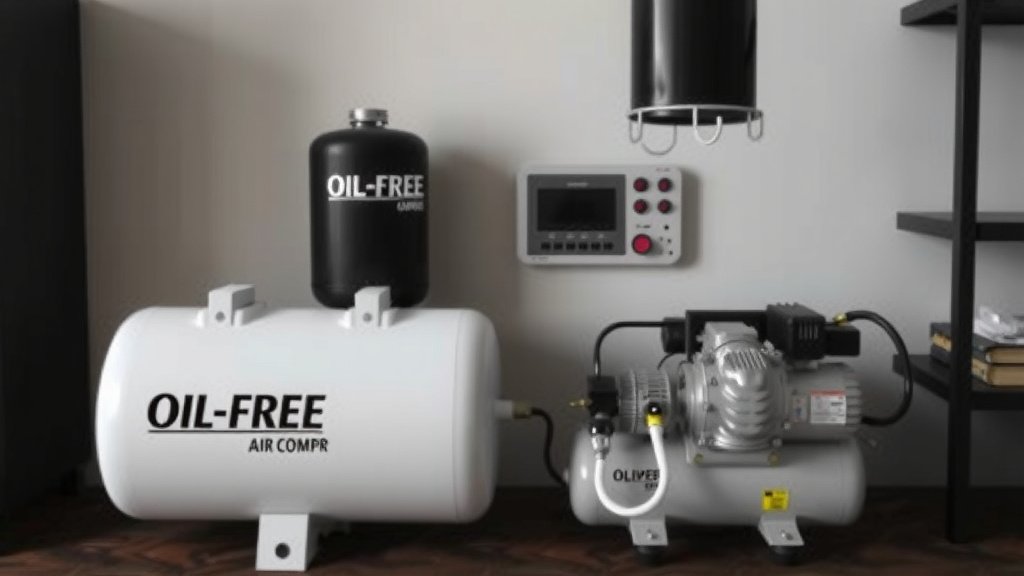
- Purity of Air: This is the primary advantage. Essential for industries like food, beverage, pharmaceutical, and medical.
- Lower Maintenance: No need to regularly check oil levels or perform oil changes. This saves time and labor.
- Reduced Contamination Risk: Eliminates the risk of oil carryover into your tools or products.
- Lighter Weight: Many oil-free models, especially piston types, are designed to be lighter and more portable.
- Quieter Operation: Some oil-free designs are inherently quieter than their oiled counterparts.
Maintenance Checklist for Your Oil-Free Compressor
Even though they are “oil-free,” these compressors still need care. Here’s a quick rundown of what to keep an eye on:
- Regularly clean or replace air intake filters.
- Check and clean the exhaust vents for blockages.
- Inspect all hoses and connections for leaks.
- Listen for any unusual noises during operation.
- Keep the exterior of the unit clean and dust-free.
- Drain the air tank regularly to remove any moisture buildup.
By performing these simple checks, you ensure your oil-free compressor runs smoothly for years. It’s about keeping things clean and efficient. Think of it as a small investment for a big payoff in reliability.
Conclusion
You’ve learned how oil-free air compressors achieve clean compressed air. Special materials in their piston rings and cylinders eliminate the need for oil. This innovative design ensures pure air for sensitive applications. It also simplifies maintenance for you. Whether you’re a DIYer or a professional, choosing oil-free means less mess and more reliability. Consider your specific needs and the type of oil-free compressor that fits best. Making the switch is a smart step toward cleaner air and easier operation. Consider your specific needs and the type of oil-free compressor that fits best, like comparing a 1-gallon vs 2-gallon model.
Frequently Asked Questions
How do oil-free compressors differ from oiled ones in daily use?
Oil-free compressors don’t require regular oil checks or changes. This means less mess and fewer maintenance tasks for you. You also get guaranteed clean air, free from any oil mist, which is essential for certain jobs.
Can an oil-free compressor handle heavy industrial use?
Yes, for many industrial needs, especially those requiring pure air. While some heavy-duty industrial applications might still use oiled rotary screw models, oil-free rotary screw and scroll types are available for demanding tasks needing clean air.
What is the expected lifespan of an oil-free compressor?
With proper care and maintenance, oil-free compressors can last for many years. The advanced materials used are designed for durability and low wear. Regular filter cleaning and checking connections helps extend their life.
Are oil-free compressors louder than their oiled counterparts?
It depends on the design. Some piston-type oil-free compressors can be noisier than oiled versions. However, scroll-type oil-free compressors are known for being exceptionally quiet and smooth during operation.
Where can I find replacement parts for my oil-free compressor?
Replacement parts like filters and hoses are typically available from the manufacturer or authorized distributors. You can usually find part numbers in your compressor’s user manual or on the manufacturer’s website.