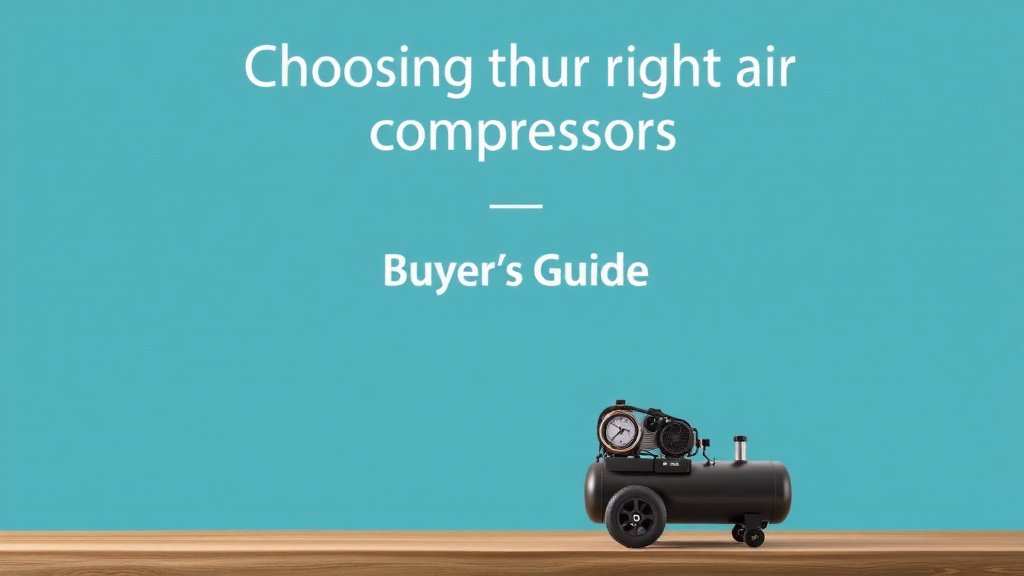
Choosing the Right Air Compressor: A Buyer’s Guide
Buying the right air compressor means matching its CFM and PSI to your tool’s needs. You also need to consider the tank size and whether you need a portable or stationary unit. Getting these basics right ensures your tools perform at their best without frustrating delays.
Choosing an air compressor can feel overwhelming with all the technical specs. But understanding a few key factors will help you make a smart purchase. We’ve researched and found that many DIYers and professionals alike struggle with this decision. This guide will make it much clearer.
- Match CFM and PSI to your tools.
- Consider tank size for your tasks.
- Decide between portable and stationary.
- Understand horsepower isn’t the main factor.
- Check the duty cycle for extended use.
Ready to find the perfect air compressor for your garage or workshop? Let’s walk through exactly how to pick the one that’s right for you, step by step.
Choosing the Right Air Compressor for Your Needs
Buying an air compressor might seem like a big decision. But don’t worry, we’re here to help you sort it out. The most important thing is to match the compressor to the tools you plan to use. This means understanding a few key specifications. We’ve found that focusing on these details makes the process much smoother.
Understanding CFM and PSI: The Power Duo
Think of CFM and PSI as the two main performance metrics for air compressors. They tell you how much air the compressor can deliver and at what pressure. Getting these numbers right is key for your tools to work as intended. We found that many people overlook these specs, leading to frustration later on.
CFM: Air Volume
CFM stands for Cubic Feet per Minute. It measures the volume of air a compressor can deliver. Your tools need a certain amount of air to operate correctly. A higher CFM rating means the compressor can supply more air. This is important for tools that are air-hungry, like impact wrenches or sanders.
So, how do you know what CFM you need? You’ll want to look at the CFM rating required by your most demanding tool. It’s usually listed in the tool’s manual or on its packaging. We recommend choosing a compressor that offers at least 1.5 times the CFM your tool needs. This gives you a little breathing room and ensures consistent performance.
PSI: Air Pressure
PSI stands for Pounds per Square Inch. It measures the amount of force or pressure the air is delivered at. Most air tools operate within a specific PSI range. The compressor needs to be able to provide this pressure reliably.
Most compressors list their maximum PSI. However, what matters more is the PSI the compressor can maintain while delivering the required CFM. A compressor that can’t keep up its pressure will cause your tools to falter. We found that higher PSI ratings are generally better, as they offer more flexibility for different tools.
Matching Compressor Specs to Your Tools
Let’s put this into practice. Imagine you have an impact wrench that needs 5 CFM at 90 PSI. You’d look for a compressor that can deliver at least 7.5 CFM (5 x 1.5) at 90 PSI. If you plan to use multiple tools at once, you’ll need to add up their CFM requirements.
We’ve seen many DIYers try to make do with undersized compressors. This often leads to tools running slower or not working at all. It’s always better to have a little more capacity than you think you’ll need. This ensures your compressor won’t be working at its absolute limit all the time, which can extend its lifespan.
Tank Size Matters: Storage Capacity
The tank is where the compressed air is stored. Tank size is measured in gallons. A larger tank means the compressor can hold more air. This can be helpful if you have tasks that require a continuous supply of air or if your tool uses air in short bursts.
For quick jobs like inflating tires or using a nail gun for a few minutes, a smaller tank might be fine. However, if you’re painting, running sanders, or using tools for extended periods, a larger tank is a big advantage. It allows the compressor motor to cycle less frequently, giving you more consistent air delivery.
| Tank Size (Gallons) | Ideal For | Considerations |
|---|---|---|
| 1-6 Gallons | Tire inflation, brad nailers, staplers | Highly portable, but air supply is limited. |
| 10-30 Gallons | Impact wrenches, spray painting, air ratchets | Good balance of portability and air storage. |
| 60 Gallons and Up | Continuous use tools, multiple users, sandblasting | Stationary units, require more power and space. |
Portable vs. Stationary: Where Will You Use It?
This is a big decision based on your workspace. Do you need to move your compressor around the garage, or will it stay in one spot?
Portable Air Compressors
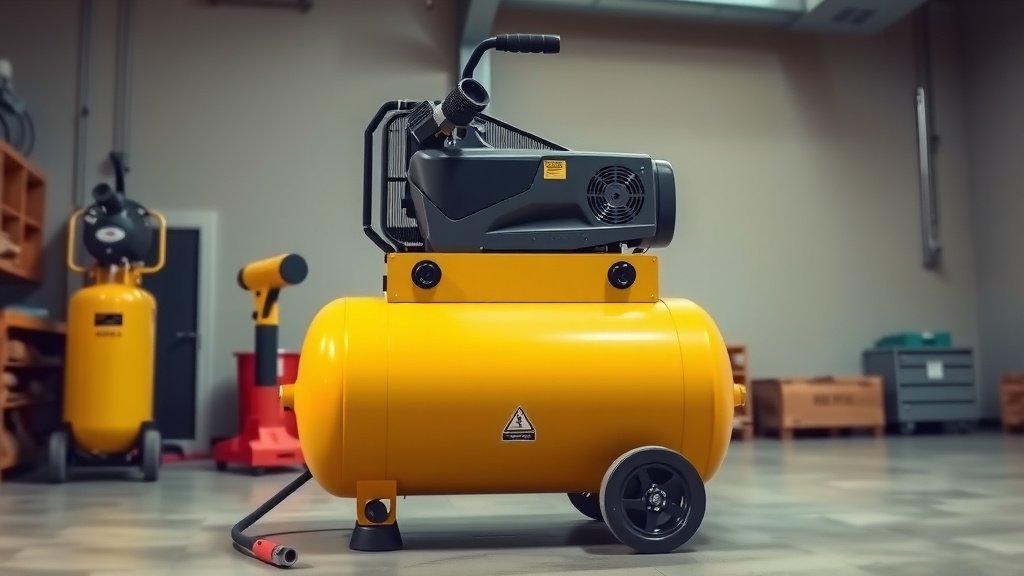
These are designed for mobility. They often have wheels and handles, making them easy to transport. We found that portable units are great for smaller workshops, car repair, or DIY projects around the house. Their smaller tank sizes often mean they are lighter and easier to store.
Stationary Air Compressors
These are typically larger, heavier units. They are meant to be permanently installed in one location, like a dedicated workshop. Stationary compressors usually have much larger tanks and more powerful motors. They are the best choice if you need a steady supply of air for demanding tasks or for multiple users.
Horsepower: Not Always the Main Story
You’ll see horsepower (HP) listed for air compressors. While it indicates motor power, we found that it’s not the most critical spec. A higher HP doesn’t automatically mean a better compressor.
Focus on CFM and PSI first. A compressor with a lower HP but a more efficient pump design might outperform a higher HP unit with a less efficient pump. Think of it like engine size versus fuel efficiency in a car; sometimes, a smaller, smarter engine is better. We recommend prioritizing CFM and PSI ratings over horsepower alone.
Duty Cycle: For Those Long Jobs
The duty cycle tells you how long the compressor can run before it needs to rest. It’s usually expressed as a percentage. For example, a 50% duty cycle means the compressor can run for 5 minutes out of every 10 minutes.
If you plan on using your air compressor for extended periods, like during a long painting session or when running a sander all day, you’ll want a compressor with a higher duty cycle. Many professional-grade compressors have a 75% to 100% duty cycle, meaning they can run almost continuously. We found that a higher duty cycle is essential for heavy-duty applications to avoid overheating and damage.
Oil-Lubricated vs. Oil-Free Compressors
This is another choice that impacts maintenance and performance. Oil-lubricated compressors generally run cooler and last longer. They are often quieter too. However, they require regular oil checks and changes.
Oil-free compressors are typically lighter, more portable, and require less maintenance. They don’t have the risk of oil contamination in the air. We found that oil-free models are great for portability and DIY use, but they can sometimes be louder and may not last as long under heavy use as their oil-lubricated counterparts.
Quick Checklist for Buying Your Compressor
Ready to make your choice? Keep these quick points in mind:
- Know your tools: List the CFM and PSI needed for each.
- Prioritize CFM: Ensure your compressor exceeds the highest CFM requirement.
- Consider tank size: Match it to the duration of your typical tasks.
- Decide on portability: Will it stay put or move around?
- Check the duty cycle: Aim for higher if you have long-running jobs.
- Budget: Find the best specs within your price range.
Conclusion
You’ve learned how to pick the perfect air compressor for your needs. It’s all about matching your tools’ CFM and PSI requirements. Don’t forget to consider the tank size and whether you need a portable or stationary unit. Focusing on these key specs, rather than just horsepower, will save you frustration. You’re now ready to make an informed purchase that ensures your tools perform their best. Take a moment to list your tools and their needs, and then confidently choose the compressor that fits.
Frequently Asked Questions
What happens if I buy an air compressor with too low CFM?
If your compressor’s CFM is too low for your tool, it won’t receive enough air volume to operate correctly. This can cause your tools to run slower, lose power, or stop working altogether. We recommend choosing a compressor that offers at least 1.5 times the CFM your most demanding tool requires.
Is a larger tank size always better?
Not necessarily. A larger tank stores more air, which is great for continuous use tools or tasks that require air in short, powerful bursts. However, for quick jobs like inflating tires or using a brad nailer occasionally, a smaller, more portable tank might be sufficient and easier to manage.
How do I determine the right PSI for my tools?
You’ll want to check the manual or specifications of your air tools. Most tools will list a required operating PSI, often around 90 PSI. Your air compressor needs to be able to reliably deliver and maintain that pressure while supplying the necessary CFM for the tool to function optimally.
What’s the difference between oil-lubricated and oil-free compressors for home use?
Oil-lubricated compressors tend to be quieter and often last longer under heavy use, but they require regular oil maintenance. Oil-free compressors are generally lighter, require less maintenance, and are less prone to contaminating the air supply, making them a good choice for DIYers and portability.
Can I use a small compressor for sandblasting?
Generally, no. Sandblasting is a very air-intensive task that requires a high CFM output and often a large tank to maintain consistent pressure. Small, portable compressors typically do not have the capacity for sandblasting and will likely struggle to keep up, leading to poor results and potential damage to the compressor.