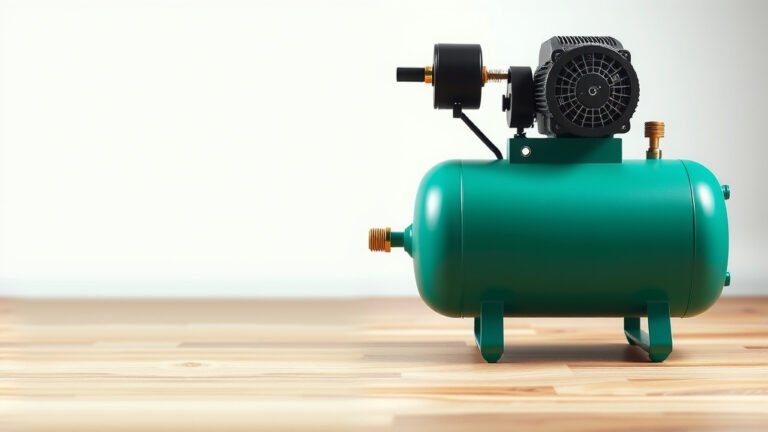
How to Patch an Air Compressor Tank Safely
You can patch a small leak in an air compressor tank, but it’s often not recommended for larger holes or critical areas. For minor surface rust or small punctures, specific repair kits and techniques might work. However, safety is key, and a damaged tank can be dangerous. Always consider the potential risks before attempting a repair.
Air compressor tanks hold pressurized air, making them a potential safety hazard if compromised. While DIY repairs for very small issues are sometimes possible, it’s wise to understand the limitations of patching. Many experts recommend replacing a tank with significant damage rather than risking a faulty repair. Your safety and the longevity of your equipment are top priorities.
- Patching small tank leaks is sometimes possible.
- Safety is the main concern with damaged tanks.
- Repairing larger holes or critical areas is risky.
- Replacing a damaged tank is often the safest option.
Ready to see if a patch is right for your situation? Let’s walk through what you need to know about patching an air compressor tank, including when it’s a good idea and when to call it quits.
Repairing Your Air Compressor Tank: When a Patch Might Work
So, you’ve discovered a leak in your air compressor tank. It’s natural to wonder if a quick patch can get you back up and running. We’ve looked into it, and yes, sometimes a small leak can be patched. But it’s not always a simple fix, and safety must be your number one priority.
Air compressor tanks store a lot of power under pressure. A compromised tank can be a real danger, like a ticking time bomb if not handled correctly. Patching is usually only considered for minor surface issues, not for significant damage or areas holding a lot of stress. Let’s talk about what’s realistic.
Assessing the Damage: Is a Patch Your Best Option?
Before you even think about grabbing a patch kit, you need to be honest about the problem. Is it a small ding, a bit of rust, or a gaping hole? This assessment is key to deciding if a repair is even feasible.
Types of Tank Damage and Patching Suitability
Not all leaks are created equal. Some can be fixed; others mean it’s time for a new tank. We’ve broken down the common issues:
Minor Punctures or Pinholes
These are the best-case scenarios for patching. Think of a tiny nail hole. These leaks are often on the surface and might not compromise the tank’s structural integrity. A good patch might seal these up effectively. Many DIY repair guides suggest this is where patching has a chance.
Surface Rust or Small Corroded Spots
If you have a small patch of rust that’s just starting to bubble or flake, and it hasn’t eaten through the metal, you might be able to clean it thoroughly and apply a patch. However, if the rust is deep and the metal feels thin or crumbly, a patch won’t hold. It’s like trying to stick tape to a sponge – it just won’t work.
Large Holes or Cracks
If you can easily fit your finger into the hole, or if there’s a visible crack that runs more than a centimeter or two, do not attempt to patch it. These larger breaches significantly weaken the tank. A patch here is unlikely to hold the pressure, and the risk of catastrophic failure is too high. Many experts, including those at industrial safety organizations, strongly advise against patching significant damage (OSHA).
Damage to Welds or Seams
The areas where the tank was originally welded together are under the most stress. If you see any signs of leaks, cracks, or corrosion along these seams, it’s a big red flag. Patches here are highly unreliable because these areas are critical to the tank’s strength. Replacing the tank is the safest route.
Patching Methods for Air Compressor Tanks
If your assessment points to a minor issue, there are a few methods you might consider. Remember, preparation is absolutely crucial for any repair to have a chance.
Using an Epoxy Repair Kit
There are specialized epoxy kits designed for metal tanks. These often involve a two-part epoxy that you mix and apply directly to the damaged area.
- Clean the Area: This is the most important step. You need to sand away any rust, paint, or debris until you have clean, bare metal. The surface must be completely dry and free of oils or grease.
- Mix the Epoxy: Follow the kit’s instructions precisely for mixing the two parts.
- Apply the Epoxy: Apply a generous amount over the leak, extending well beyond the damaged spot. Smooth it out to create a good seal.
- Cure Time: Let the epoxy cure fully according to the manufacturer’s instructions. This can take several hours or even a full day. Rushing this step will lead to a failed repair.
Using a Patch Kit with Reinforcement
Some kits might include a piece of metal or fiberglass mesh to apply over the epoxy for added strength. This can be helpful for slightly larger pinholes.
- Prepare the Surface: Same as above – clean, dry, bare metal is essential.
- Apply Epoxy: Apply a layer of epoxy to the tank.
- Place the Patch: Immediately press the reinforcement patch into the wet epoxy.
- Apply More Epoxy: Cover the reinforcement patch with another layer of epoxy, ensuring there are no air bubbles and the edges are sealed.
- Cure: Allow ample time for curing.
When to Absolutely Call It Quits (And Get a New Tank)
We can’t stress this enough: your safety is more important than saving a few bucks. If you have any doubts, or if the damage falls into these categories, it’s time to move on to a new tank.
- Any damage to the main body that isn’t a tiny pinhole.
- Cracks or rust on the welds or seams.
- Any area where the metal feels thin or weak. Any area where the metal feels thin or weak is a concern; our guide on air compressor tank thickness explains why.
- Multiple leak points.
- If the tank has been dropped or subjected to impact.
Many manufacturers and safety experts recommend replacing an air compressor tank that shows signs of significant corrosion or damage, rather than risking a repair that could fail under pressure (American Society of Mechanical Engineers).
A Quick Checklist Before You Patch
Feeling uncertain? Ask yourself these questions:
- Is the leak truly a tiny pinhole or small surface rust spot?
- Is the metal around the leak still thick and strong, with no signs of thinning?
- Is the damage far away from any welded seams?
- Do I have a high-quality repair kit specifically for pressurized tanks?
- Am I prepared to replace the tank immediately if the patch fails or if I’m not 100% confident?
If you answered “no” to any of these, it’s probably time to look for a replacement tank. It’s the responsible choice for your safety and the reliable operation of your compressor.
Conclusion
Patching an air compressor tank can be a temporary fix for very minor issues like tiny pinholes or surface rust. We’ve seen that thorough preparation and the right materials are non-negotiable for any chance of success. However, it’s vital you’re honest about the damage. Larger holes, cracks, or any compromise near welds mean you should prioritize safety and replace the tank. If you’re not 100% confident the patch will hold, err on the side of caution. Your best next step is to carefully assess your tank’s damage and decide if a patch is truly viable or if it’s time to invest in a new, safe tank.
Frequently Asked Questions
Can I use a general metal epoxy patch kit on my air compressor tank?
While some general metal epoxy kits might work for very minor leaks, it’s best to use a kit specifically designed for pressurized tanks. These kits are formulated to withstand the pressure fluctuations your compressor experiences, offering a more reliable seal.
What’s the biggest risk of patching an air compressor tank incorrectly?
The primary risk is the patch failing under pressure, which could lead to a sudden and dangerous release of air. This can cause damage to the compressor, nearby objects, or even result in serious injury to yourself or others.
How do I know if my tank has thin metal due to rust?
You can test for thin metal by gently pressing on the suspect area with a screwdriver or a similar tool. If the metal feels soft, crumbly, or gives way easily, it’s likely too thin to safely hold a patch or the tank’s pressure.
Is it safe to patch a leak on a seam or weld?
No, it is strongly advised against patching leaks on seams or welds. These areas are already under the most stress, and a patch is highly unlikely to provide the necessary structural integrity to prevent failure.
If I patch a small leak, how long should I wait before using the compressor again?
Always follow the specific cure time instructions on your chosen repair kit. For most epoxy-based kits, this means waiting at least 24 hours, and sometimes longer, to ensure the patch is fully hardened and ready to withstand pressure.