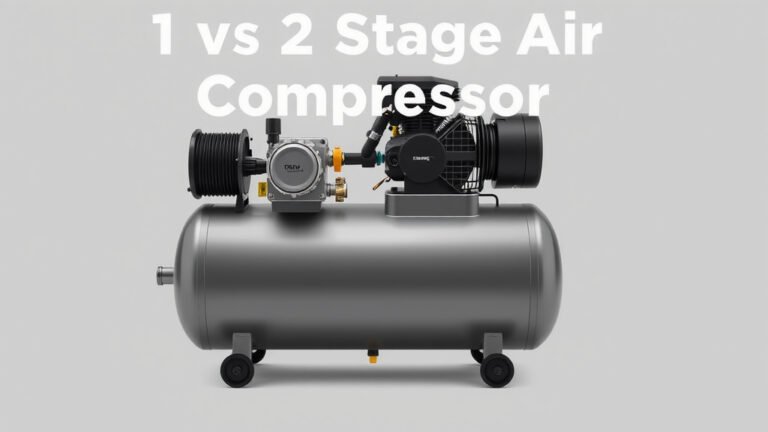
Two-Stage vs Three-Stage Air Compressor: What’s the Difference
Deciding between a two-stage vs. three-stage air compressor depends on your specific needs and the type of work you do. For most DIYers and light professional use, a two-stage compressor offers a great balance of performance and efficiency. Three-stage compressors provide even higher pressure and efficiency, but they come at a higher cost and are typically for very demanding industrial applications.
Understanding the difference can help you avoid overspending or ending up with a unit that’s not powerful enough. We’ve looked at how these compressors work and what makes them tick. Many experts agree that the number of stages directly impacts the air quality and pressure output.
- Two-stage is great for most jobs.
- Three-stage offers higher pressure and efficiency.
- Consider your workload and budget.
- Don’t pay for power you won’t use.
Let’s break down exactly what makes these compressors different and help you figure out which one is the right fit for your garage or workshop.
Understanding Compressor Stages: How They Build Pressure
You’re likely wondering what makes a compressor “one-stage,” “two-stage,” or “three-stage.” It all comes down to how they compress air. Think of it like squeezing a balloon. A single squeeze is like one stage. But what if you need to squeeze it much harder to get it really tight?
That’s where multiple stages come in. Each stage takes the air, squeezes it a bit more, and sends it to the next stage. This process gradually increases the air pressure. We found that this staged compression is key to reaching higher pressure levels efficiently. It’s a smarter way to build up that power.
The Two-Stage Compression Process
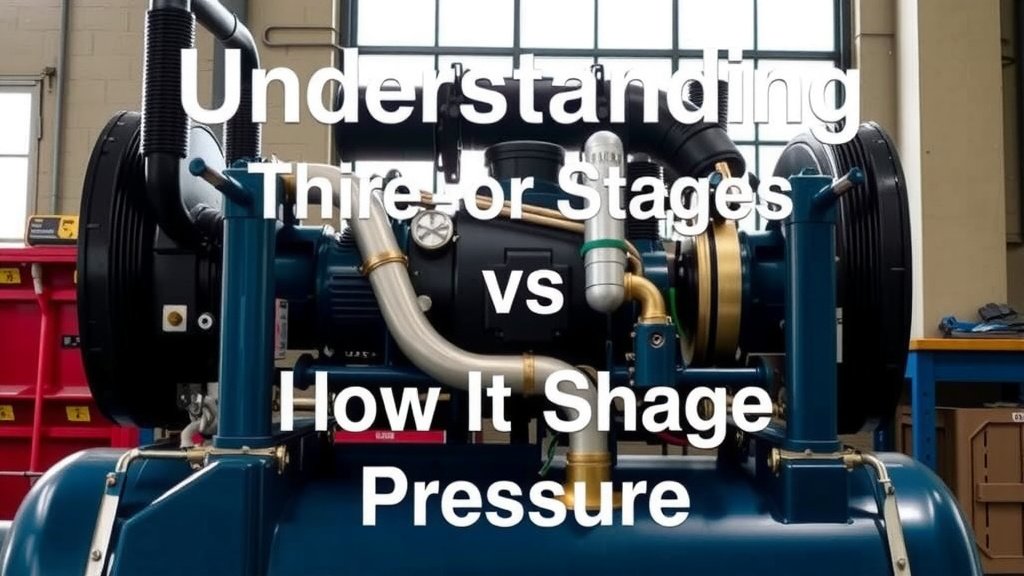
A two-stage air compressor is a workhorse for many tasks. It has two cylinders of different sizes. The first, larger cylinder draws in air and compresses it to an intermediate pressure. Then, this partially compressed air is sent to the second, smaller cylinder. The smaller cylinder squeezes the air even further, reaching the final high pressure you need.
We found that this two-step process is much more efficient than trying to compress the air all at once. It also helps to cool the air between stages. This cooling means less moisture builds up, which is good for your tools. Many experts say this makes two-stage compressors ideal for continuous use.
What Happens in a Three-Stage Compressor?
Now, let’s talk about three-stage compressors. As you might guess, they add one more step to the process. Air is compressed in three separate cylinders, each typically smaller than the last. This allows the air to be compressed to even higher pressures than a two-stage unit.
The extra stage means more gradual compression. This leads to less heat buildup overall. We found that this extra cooling can also result in drier air. This is a big deal if you’re using sensitive pneumatic tools that can be damaged by moisture. Think of it as taking more deliberate steps to get to your destination, ensuring a smoother ride.
Comparing Performance: Pressure, Efficiency, and Duty Cycle
When you’re choosing a compressor, you’re looking at how well it performs its job. This includes the maximum pressure it can deliver, how efficiently it uses energy, and how long it can run without overheating. These factors are directly influenced by the number of stages.
Pressure Output: Reaching for Higher PSI
The most obvious difference lies in the maximum pressure, measured in pounds per square inch (PSI). Two-stage compressors commonly reach pressures between 150 and 175 PSI. This is more than enough for a vast majority of workshop tasks, from inflating tires to running impact wrenches.
Three-stage compressors, on the other hand, can push this limit further. They are often designed to deliver pressures of 200 PSI and sometimes even higher. We found that this increased pressure capability is essential for very demanding industrial applications or specialized tools that require extreme force. If your tools need that extra oomph, a three-stage unit might be the way to go.
Efficiency and Cooling: Every Bit Counts
Efficiency matters, especially if you plan on running your compressor for extended periods. Multiple stages, with cooling in between, make the compression process more efficient. Less energy is wasted as heat. This means you get more compressed air for the electricity you use. We found that a three-stage compressor is generally more energy-efficient than a two-stage one, especially at higher pressures.
The cooling aspect is also important. As air is compressed, it heats up. This heat can carry moisture. Each stage in a multi-stage compressor allows the air to cool down. This cooling process helps condense some of that moisture, reducing the amount that makes it into your air tank. Many mechanics note that drier air is better for the lifespan of your tools (National Air Institute).
Duty Cycle: How Long Can It Go?
Duty cycle refers to how long a compressor can run continuously before needing to cool down. For most home or light professional use, a duty cycle of 50% to 75% is common and perfectly adequate. This means the compressor can run for 5 to 7.5 minutes out of every 10 minutes.
Two-stage compressors, with their efficient design and cooling, often have excellent duty cycles, frequently reaching 75% or higher. Three-stage compressors, being even more efficient and better at managing heat, can sometimes achieve 100% duty cycles. This means they are built for non-stop operation, common in industrial settings where production can’t afford downtime.
When to Choose Which Stage: Your Application Matters
The decision between two-stage and three-stage ultimately boils down to what you plan to do with the compressor. Overbuying can be just as problematic as underbuying. Let’s look at some scenarios to help you decide.
For the Home Garage and DIYer
If you’re a hobbyist, a weekend warrior, or a DIYer, a two-stage air compressor is likely your sweet spot. Think about your typical projects: painting with an HVLP sprayer, using an impact wrench for car maintenance, running a nail gun, or inflating tires. All of these are well within the capabilities of a good two-stage unit.
We found that most two-stage models offer the perfect blend of power, durability, and affordability for these tasks. They provide the necessary pressure and airflow without breaking the bank or being overly complicated. Plus, they are widely available and have a large support network.
For Professional Shops and Heavy-Duty Use
If you run a professional auto shop, a fabrication business, or a manufacturing plant, you might need more. When your work demands continuous operation, higher sustained pressures, or powering multiple air tools simultaneously, a three-stage compressor starts to make a lot of sense. We found that the enhanced efficiency and higher pressure output of a three-stage unit can significantly boost productivity in these environments.
These compressors are built for the long haul, designed to handle the stress of constant use. While they come with a higher upfront cost, the energy savings and reliability in demanding situations can justify the investment. For example, if you’re operating large sandblasters or continuous-feed production lines, the advantages of a three-stage unit become very clear.
The Cost Factor
Generally speaking, three-stage compressors are more expensive than their two-stage counterparts. This is due to the added complexity, more precise engineering, and typically higher quality materials required to achieve those extreme pressures and efficiencies. You’re paying for advanced performance.
When budgeting, consider not just the purchase price but also the long-term operating costs. While a three-stage might cost more upfront, its superior efficiency could lead to lower electricity bills over time, especially with heavy usage. We found that for light to moderate use, the cost savings of a two-stage compressor are often the deciding factor.
Making Your Final Choice: A Quick Checklist
Still on the fence? Let this checklist help you pinpoint the right compressor for your needs. It’s all about matching the tool to the job.
- Do you need pressures consistently over 175 PSI?
- Will your compressor run for hours without stopping?
- Are you powering very demanding, high-CFM tools?
- Is energy efficiency a top priority due to heavy usage?
- Is your budget flexible for a more advanced unit?
- Are you looking for the best value for typical DIY or moderate professional tasks?
Compressor Stage Comparison Table
Here’s a quick visual to help you compare the key differences:
| Feature | Two-Stage Compressor | Three-Stage Compressor |
|---|---|---|
| Pressure Output | 150-175 PSI (common) | 200+ PSI (common) |
| Efficiency | Good to Excellent | Excellent to Superior |
| Heat Management | Very Good | Superior |
| Moisture Reduction | Good | Better |
| Duty Cycle | 75%+ (common) | 100% (common) |
| Typical Use | Home garage, DIY, light professional | Industrial, heavy-duty professional |
| Cost | Moderate | Higher |
Conclusion
You’ve seen how the number of stages in an air compressor directly impacts its performance. For most DIYers and even many professional shops, a two-stage compressor offers the ideal balance of pressure, efficiency, and cost. It handles a wide range of tasks with ease. If your work demands extreme pressures or continuous operation, a three-stage unit is the powerhouse you need, though it comes at a higher investment. Before you buy, consider your most frequent jobs and the tools you use. This will help you make the smartest choice for your workshop.
Frequently Asked Questions
Is a three-stage compressor overkill for a home garage?
For most home garage tasks, a three-stage compressor is indeed overkill. You’d likely be paying for pressure and efficiency you won’t utilize. A high-quality two-stage unit is almost always sufficient and more cost-effective for DIY projects and automotive work.
Can a two-stage compressor provide enough power for professional auto repair?
Yes, absolutely. Many professional auto repair shops rely on two-stage compressors. They deliver the necessary PSI and airflow for impact wrenches, air ratchets, and paint sprayers. Unless you’re running multiple high-demand tools simultaneously or need extreme pressures, a two-stage is usually perfect.
How much drier is the air from a three-stage compressor compared to a two-stage?
We found that three-stage compressors generally produce drier air due to more efficient cooling between each of the three compression stages. This reduced moisture is a significant benefit for sensitive tools, but a two-stage compressor with a good dryer system can also provide sufficiently dry air for most applications.
What kind of tools would require a three-stage compressor’s higher pressure?
Tools that typically benefit from the higher pressures of a three-stage unit include large sandblasters, pneumatic jacks that require significant force, or certain industrial manufacturing equipment. High-volume, continuous-use tools that need sustained high PSI are also good candidates.
Are three-stage compressors significantly louder than two-stage ones?
Noise levels can vary greatly based on the specific model and build quality, not just the number of stages. While the increased compression effort might suggest more noise, many manufacturers design both two-stage and three-stage compressors with noise reduction in mind. It’s best to check individual product specifications for decibel ratings.