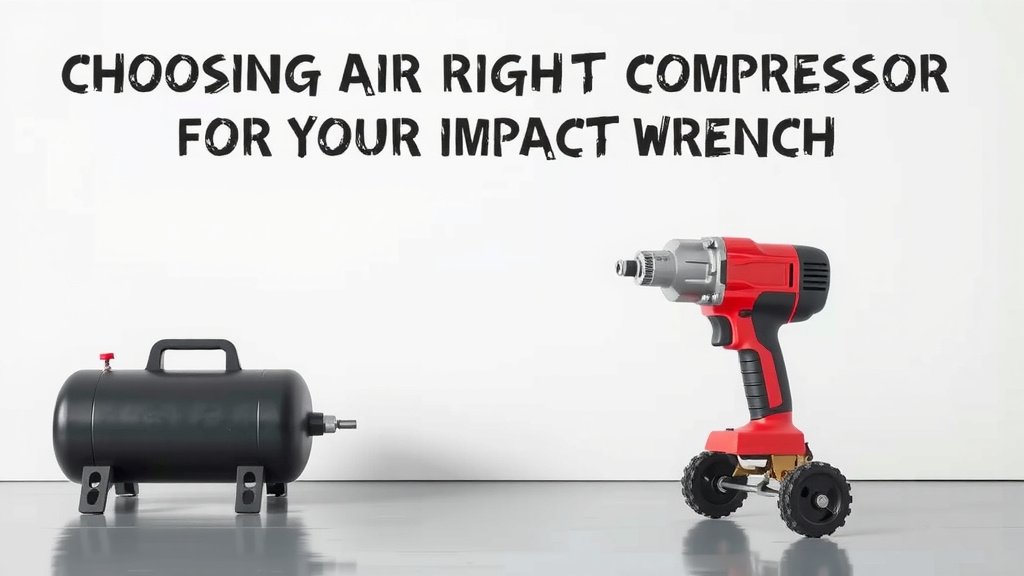
Choosing the Right Air Compressor for Your Impact Wrench
Choosing the right air compressor for your impact wrench matters. To run an impact wrench effectively, you need an air compressor that can deliver enough air volume (CFM) and pressure (PSI). Most impact wrenches require around 5-8 CFM at 90 PSI to work their best. Insufficient CFM is the most common reason for poor performance.
Getting this wrong means your wrench might not have enough power. It could lead to frustration when loosening stubborn bolts. We found that matching the compressor’s output to your wrench’s needs is key for efficient work. Don’t guess; check the specs for both tools to ensure compatibility and get the job done right. Your project will thank you.
- Impact wrenches need sufficient air volume (CFM) and pressure (PSI).
- Most tools need about 5-8 CFM at 90 PSI.
- Low CFM causes weak performance.
- Match compressor specs to your wrench’s demands.
Let’s dive into the specifics of finding that perfect air compressor match. We’ll cover what to look for and why it’s so important for your impact wrench.
“`htmlChoosing the Right Air Compressor Size for Your Impact Wrench
Finding the right air compressor is like picking the perfect engine for your car. You need enough power to get the job done smoothly. For an impact wrench, this means looking at two main specs: CFM and PSI.
Understanding CFM: The Heartbeat of Your Air Tool
CFM stands for cubic feet per minute. It tells you how much air your compressor can deliver. Think of it as the volume of air your impact wrench needs to breathe. If your wrench needs 5 CFM, and your compressor only gives 3 CFM, it’s like trying to drink through a tiny straw. It just won’t work well.
Why CFM is King for Impact Wrenches
Impact wrenches work by sending short bursts of torque. This requires a steady, large supply of air. If the compressor can’t keep up, your wrench will feel sluggish. It might struggle to break loose a stubborn bolt or it may not tighten fasteners properly. Many auto repair guides suggest that CFM is more critical than PSI for most air tools, including impact wrenches.
Finding Your Wrench’s CFM Needs
You’ll usually find the CFM requirement printed on the tool itself. It might also be in the owner’s manual. Look for a rating at a specific PSI, often 90 PSI. This is the industry standard for testing air tools. For example, a medium-duty impact wrench might need around 5 CFM at 90 PSI.
PSI: The Pressure Behind the Power
PSI stands for pounds per square inch. This measures the force of the air. Most impact wrenches operate effectively between 90 and 110 PSI. While important, it’s usually secondary to CFM for impact wrench performance.
Matching PSI Requirements
Your air compressor will have a maximum PSI rating. You’ll also set a regulator on the compressor or on the air line. This regulator ensures the air delivered to your wrench is at the correct pressure. Running too high a PSI can damage your tool. Too low, and you won’t get full power. Most compressors designed for DIY use can easily meet the PSI needs of an impact wrench.
Why Too Much Pressure Isn’t Always Good
While it might seem like more pressure equals more power, it’s not always true for impact wrenches. The tool is designed for a specific pressure range. Exceeding this can cause internal damage. It’s like overinflating a balloon; it might pop. Always stay within the recommended PSI range. Many sources recommend setting your regulator to 90 PSI for most impact wrench tasks.
Calculating Your Compressor Needs: CFM and Tank Size
Now that you understand CFM and PSI, let’s talk about how to choose the right compressor. You need to ensure your compressor’s output is higher than your tool’s demand.
The Rule of Thumb: Add a Buffer
We found that it’s wise to select a compressor that offers 1.5 to 2 times the CFM your impact wrench requires. So, if your wrench needs 5 CFM at 90 PSI, look for a compressor that delivers at least 7.5 to 10 CFM at 90 PSI. This buffer accounts for leaks in the air hose, the compressor not running at peak efficiency, and ensuring the compressor doesn’t have to work constantly.
How Tank Size Plays a Role
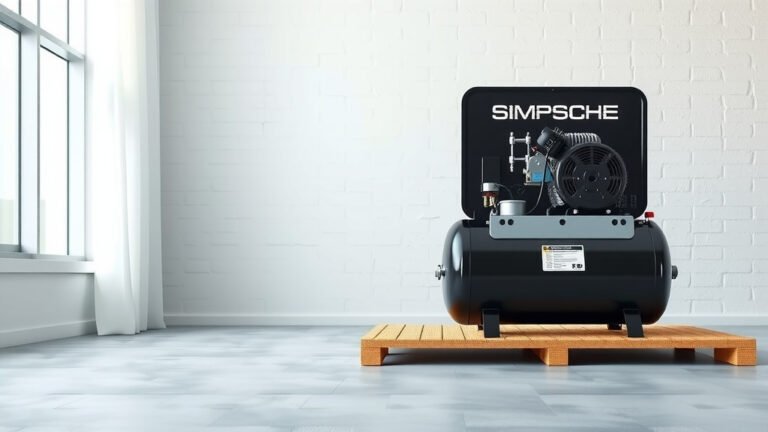
The tank on an air compressor is like a reservoir for compressed air. A larger tank means the compressor motor doesn’t have to cycle on and off as frequently. For impact wrenches, a larger tank is helpful because it can store more air to handle those quick bursts of power. A tank size of 20 gallons or more is often recommended for frequent impact wrench use.
Small Tanks vs. Large Tanks
A small tank might be okay for very light, occasional use. However, if you’re doing anything more than a few minutes of continuous work, a small tank will run out of air quickly. The compressor will cycle on more often, which can be noisy and less efficient. You’ll experience pauses in your work as the tank refills. Many home mechanics find a 30-60 gallon tank provides a good balance.
Understanding Compressor Types: Oil vs. Oil-Free
Air compressors come in two main types: oil-lubricated and oil-free. Each has its pros and cons for your impact wrench needs.
Oil-Lubricated Compressors
These tend to be quieter and last longer. They also produce a cleaner air supply, which is better for sensitive air tools. The trade-off is that they require regular maintenance, like oil changes. Many professional shops prefer them.
Oil-Free Compressors
These are typically lighter, more portable, and require less maintenance. You don’t have to worry about oil levels. However, they can be louder and may not last as long as oil-lubricated models. They are a great option for home garages where noise might be less of a concern and ease of use is a priority.
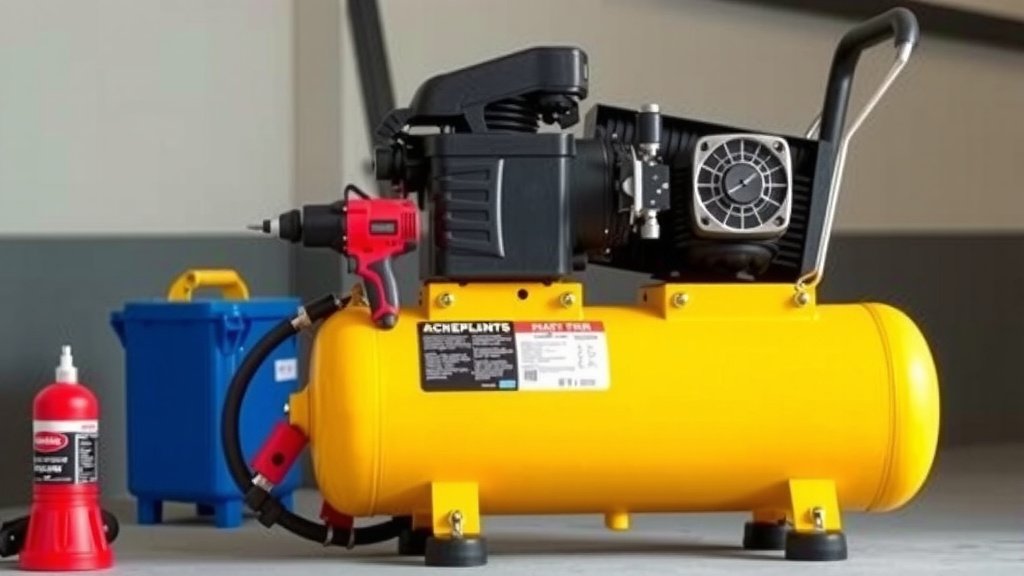
Putting It All Together: Your Impact Wrench Checklist
To ensure your impact wrench performs its best, follow these simple steps:
- Check your impact wrench’s CFM and PSI requirements. This is the most critical step.
- Look for a compressor with a CFM rating 1.5-2 times higher than your wrench’s needs at 90 PSI.
- Consider a tank size of 20 gallons or larger for consistent performance.
- Factor in the PSI output of the compressor, ensuring it can meet or exceed your tool’s needs (with a regulator).
- Decide between oil-lubricated or oil-free based on your maintenance preference and noise tolerance.
By paying attention to these details, you’ll avoid the frustration of an underpowered tool and make your projects much easier. Your future self, wrestling with a stubborn bolt, will thank you!
“`Conclusion
You’ve learned that picking the right air compressor for your impact wrench isn’t complicated. It boils down to matching the tool’s CFM and PSI needs. Remember to add a buffer to the CFM requirement for best performance. A larger tank size also helps ensure consistent power delivery. By following these guidelines, you’ll get the most out of your impact wrench, making your projects smoother and more enjoyable. Your next step is to check your wrench’s specs and start looking for a compressor that meets those demands!
Frequently Asked Questions
Do I need a large air compressor for a small impact wrench?
Not necessarily. While larger compressors offer more air and run less often, a smaller wrench has lower demands. Check the specific CFM and PSI needed by your small impact wrench. Then, find a compressor that comfortably meets or slightly exceeds those requirements.
Can I use a compressor with a lower CFM than my impact wrench needs?
You can, but your impact wrench will likely perform poorly. It will struggle to deliver full power, making it difficult to loosen stubborn bolts. We found that a compressor’s CFM rating is more critical than its PSI for impact wrench operation.
How does tank size affect my impact wrench’s performance?
A larger tank acts as an air reservoir, storing compressed air. This means your compressor motor runs less frequently. For impact wrenches, which use short bursts of high torque, a larger tank provides a more consistent air supply without interruption.
Will a higher PSI compressor make my impact wrench stronger?
Not exactly. Impact wrenches are designed for a specific operating pressure, typically around 90 PSI. Running them at a much higher PSI can damage the tool. Always use a regulator to set the correct PSI for your wrench.
Is an oil-free or oil-lubricated compressor better for an impact wrench?
Both can work well. Oil-lubricated compressors are often quieter and last longer, making them great for professional use. Oil-free models are lighter, require less maintenance, and are a good choice for home garages or portable use.