How to Calculate Air Compressor Size: A Step-by-Step Guide
Calculating your air compressor size is easier than you might think. You generally need to determine the total cubic feet per minute (CFM) required by your tools and then add a buffer for efficiency and future needs. Getting the right size prevents frustration and ensures your tools work properly.
Choosing the correct air compressor size ensures consistent airflow for all your pneumatic tools. An undersized compressor will struggle, leading to drop-offs in performance and potential damage. We’ve researched common scenarios and found that understanding CFM and PSI is key for making an informed decision.
- Figure out the CFM needs of all your tools.
- Add a safety margin for continuous use.
- Consider the required tank size for your workflow.
- Don’t forget about the necessary PSI for your tools.
- Future tool purchases might influence your decision.
Let’s walk through exactly how to calculate the perfect air compressor size for your workshop, step by step.
Figuring Out Your Air Compressor’s Size
Choosing the right air compressor size is like picking the right-sized engine for your car. Too small, and it sputters; too big, and you’re wasting fuel. We’ve found that understanding a few key measurements will help you nail this. You’ll want to focus on Cubic Feet per Minute (CFM) and Pounds per Square Inch (PSI). These two numbers are the heart of air compressor performance. Let’s break down how to calculate your needs. Understanding CFM and PSI is key for making an informed decision about compressor size.
Understanding CFM: The Lifeline of Your Tools
CFM, or Cubic Feet per Minute, tells you how much air volume the compressor can deliver. Think of it as the water pressure in your pipes. If your tools need a certain amount of air to work effectively, CFM is the metric that tells you if the compressor can keep up. Most tools have their CFM requirement listed. You’ll usually find this on the tool itself or in its manual.
How to Find Your Tools’ CFM Needs
The first step is to gather all the pneumatic tools you plan to use. This includes everything from impact wrenches and sanders to paint sprayers and nail guns. You’ll need to find the maximum CFM each tool uses. We researched common tool types, and a good rule of thumb is to add up the CFM ratings of all the tools you might use simultaneously. However, most people don’t run every tool at once. It’s more practical to identify your most demanding tool or the combination of tools you’ll use most often.
Many experts suggest looking at the duty cycle of your tools as well. This is the percentage of time a tool can run before needing to cool down. A tool with a high duty cycle, like a sander, will continuously draw air. A tool with a low duty cycle, like a brad nailer, only uses air in short bursts.
Calculating Your Total CFM Requirement
Here’s where you put it all together. Take the CFM rating of your most air-hungry tool. Then, add the CFM ratings of any other tools you anticipate using at the same time. For example, if your die grinder needs 5 CFM and you might also use a small air ratchet needing 2 CFM simultaneously, your base need is 7 CFM. Many guides recommend adding a buffer to this number. This buffer accounts for leaks in your air lines and ensures your compressor isn’t always running at its absolute limit. We found that a 30-50% buffer is a smart choice for most workshops. So, for our example, 7 CFM plus a 50% buffer (3.5 CFM) brings you to 10.5 CFM. This is the minimum you should look for in a compressor.
PSI: The Force Behind the Airflow
PSI stands for Pounds per Square Inch. This measures the air pressure. Most common tools operate in the 90-100 PSI range. Your compressor needs to be able to deliver the required CFM at the necessary PSI for your tools to function correctly. It’s not enough for a compressor to push a lot of air if that air isn’t under enough pressure. Think of it like a garden hose; you need enough water volume (CFM) and enough water pressure (PSI) to get the job done. Most compressors list a maximum PSI they can achieve.
Matching PSI Needs
Check the requirements for your specific tools. Most common workshop tools operate at around 90 PSI. When you look at air compressor specifications, you’ll usually see a maximum PSI rating, often around 125 PSI or higher. This is generally sufficient for most DIY and professional applications. What’s more important is that the compressor can *sustain* the required CFM at your tools’ operating PSI. A compressor that can only hit its max PSI for a second won’t be very useful.
Considering Tank Size: The Air Reservoir
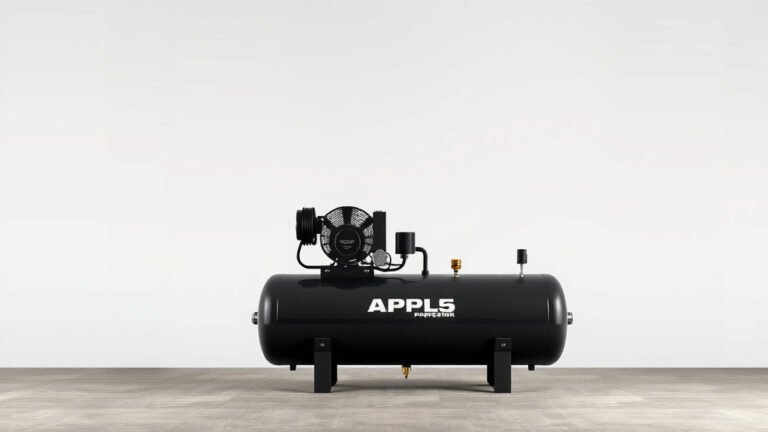
The air compressor’s tank stores compressed air. A larger tank means you have a bigger reservoir of air ready to go. This is especially helpful for tools that have intermittent high demands. A bigger tank can supply that surge of air without the compressor motor needing to kick on immediately. This reduces wear and tear on the motor and provides a more consistent experience for you.
How Tank Size Affects Your Workflow
For tasks that use air in short bursts, like using a nail gun for framing, a smaller tank might be fine as long as the CFM is adequate. However, if you’re using tools that demand continuous airflow, like an orbital sander or a paint sprayer, a larger tank is highly beneficial. We found that for most general workshop use, a tank size between 20 and 60 gallons offers a good balance. For heavy-duty, continuous use, you might consider tanks of 80 gallons or more. The key is that the tank should be large enough to buffer the intermittent demands of your tools, allowing the compressor to cycle less frequently.
Types of Air Compressors to Consider
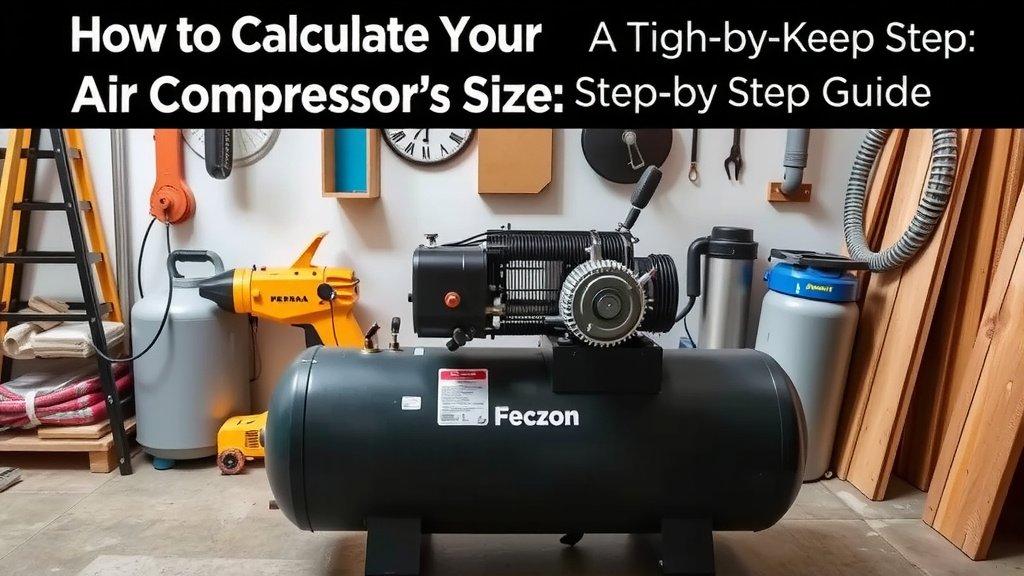
There are two main types of compressors you’ll encounter: single-stage and two-stage. Single-stage compressors compress air in one step. They are generally less expensive and suitable for lighter tasks. Two-stage compressors compress air in two steps, leading to higher pressure and more efficient operation. These are better for more demanding applications. We found that most home workshops benefit from a good quality single-stage compressor, while professional garages often opt for two-stage models for their durability and higher output. Power source is another consideration; electric is common for home use, while gas-powered options offer portability for job sites.
| Tool Type | Typical CFM @ 90 PSI | Typical PSI |
|---|---|---|
| Brad Nailer | 0.5 – 1.0 CFM | 90 PSI |
| Impact Wrench | 4.0 – 6.0 CFM | 90 PSI |
| Orbital Sander | 8.0 – 10.0 CFM | 90 PSI |
| Paint Sprayer (HVLP) | 6.0 – 9.0 CFM | 90 PSI |
| Die Grinder | 4.0 – 5.0 CFM | 90 PSI |
A Quick Checklist for Sizing Your Compressor
To make sure you don’t miss anything, keep this checklist handy:
- List all your pneumatic tools.
- Find the CFM requirement for each tool.
- Determine your highest simultaneous CFM need.
- Add a 30-50% buffer for efficiency.
- Check the PSI requirement for your tools (usually 90 PSI).
- Consider your tank size based on how you use your tools.
Conclusion
You’ve learned the key steps to confidently calculate your air compressor size. Remember, it all comes down to understanding your tools’ CFM requirements and matching them with the compressor’s output. Adding a buffer is essential for efficiency and future-proofing your setup. Don’t forget that PSI and tank size also play important roles in your tools’ performance and your overall experience. Now that you have the knowledge, take a moment to list your tools and their needs. Your next step is to use these calculations to shop for the perfect air compressor for your workshop.
Frequently Asked Questions
How do I know if my air compressor is too small?
If your air compressor’s motor constantly runs and it struggles to maintain pressure, it’s likely too small. You might also notice tools losing power or not functioning correctly. You can usually check the CFM output against your tools’ needs to confirm.
What is the difference between CFM and SCFM?
SCFM stands for Standard Cubic Feet per Minute. It’s a measurement of airflow under specific, standardized conditions (temperature and pressure). CFM is measured under actual operating conditions, which can vary. For most DIYers, CFM is the number you’ll focus on when selecting a compressor.
Do I need a larger tank if I use tools intermittently?
A larger tank is beneficial even for intermittent use because it acts as a buffer. It can supply the surge of air needed for short bursts without the compressor motor cycling on and off constantly. This provides a more consistent pressure for your tools.
Can I use a compressor with a higher PSI than my tools require?
Yes, you can generally use a compressor with a higher maximum PSI than your tools require, as long as you use a regulator to set the output pressure to the tool’s specified PSI. Running a tool above its rated PSI can damage it.
How often should my air compressor cycle on and off?
Ideally, your air compressor’s motor shouldn’t be running constantly. It should cycle on to build pressure and then shut off. If it’s cycling on too frequently or running continuously, it might indicate it’s undersized or there’s a leak in your system.