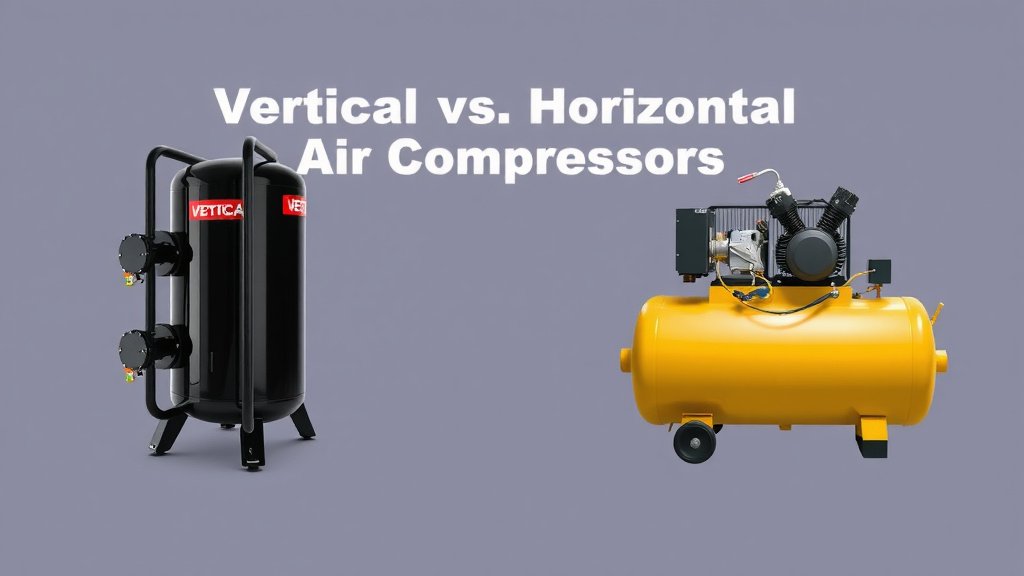
Vertical vs Horizontal Air Compressor: Which Is Best
When deciding between an air compressor’s vertical vs. horizontal design, the choice often comes down to your available shop space. Vertical tanks are fantastic for saving precious floor real estate, making them a top pick for smaller workshops. Horizontal tanks, on the other hand, can sometimes offer greater stability and might be easier to access for maintenance, though they take up more room.
Both designs aim to store compressed air efficiently, but their physical orientation impacts how they fit into your workspace. We found that considering factors like mobility, noise levels, and the overall layout of your tools is key. Your decision will directly influence how smoothly your projects can run.
- Vertical compressors save floor space.
- Horizontal compressors can be more stable.
- Consider your shop’s layout carefully.
- Mobility is another important factor.
- Maintenance access can differ.
Let’s dive into the details and help you figure out which type of air compressor is the best fit for your specific needs and workspace. To help you decide, consider the differences between a 1 gallon vs 2 gallon air compressor.
Choosing Between Vertical and Horizontal Air Compressors
So, you’re in the market for an air compressor and wondering about the difference between vertical and horizontal designs. It’s a common question, and the answer really boils down to how you’ll use it and, most importantly, the layout of your workshop. We’ve looked into this quite a bit, and it’s not just about looks; it impacts functionality.
Vertical Air Compressors: The Space Savers
Let’s start with the vertical design. As the name suggests, these compressors stand tall. They have a tank that’s oriented upwards, much like a rocket ready for launch. This design is a lifesaver if you’re working with limited floor space. Think of a small garage, a cramped auto repair shop, or even a busy home workshop. You can tuck them away in a corner and still have plenty of room to move around.
Why a Vertical Tank Might Be Your Best Bet
The biggest advantage here is space efficiency. We found that for many users, especially DIY enthusiasts with smaller shops, this is the deciding factor. You get the air storage you need without sacrificing valuable real estate for your tools and workbench. It’s like having a tall, slender friend who doesn’t take up much room at the party.
Saving Your Precious Floor Space
Imagine walking into your workshop. Do you have wide-open floors, or is every square inch accounted for? If it’s the latter, a vertical compressor is probably your go-to. It allows you to keep your workspace clear for other equipment and projects. Many users report feeling much more organized and less cramped after switching to a vertical model.
Potential Downsides to Consider
While space-saving is great, vertical tanks can sometimes be a bit less stable, especially if they have a smaller footprint. If you have a particularly uneven floor or tend to bump into things, you might want to ensure it’s very securely mounted. We also found that accessing some components for maintenance might require a bit more stretching or a step stool, depending on the model. It’s a small trade-off for saving space, but worth noting.
Horizontal Air Compressors: Stability and Access
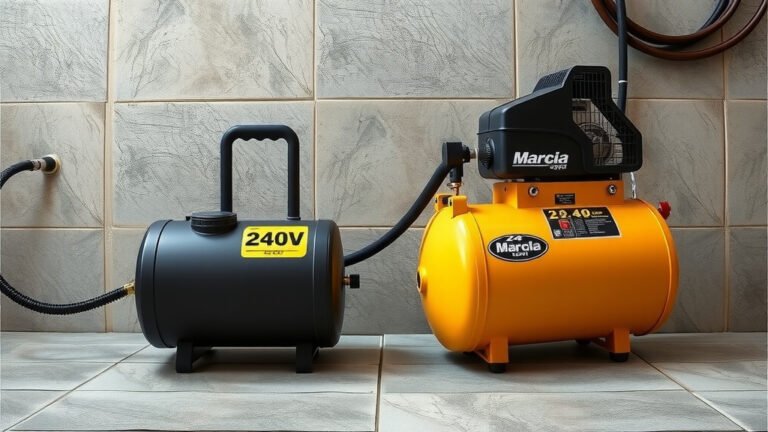
Now, let’s look at the horizontal design. These compressors lie on their side, resembling a long cylinder resting on the ground. They tend to have a larger footprint than their vertical counterparts but offer some distinct advantages. If you have ample floor space and prioritize stability and ease of access, a horizontal compressor might be a better fit for your needs.
The Benefits of a Horizontal Orientation
One of the main reasons people opt for horizontal models is enhanced stability. Because they have a wider base, they are generally more resistant to tipping. This is especially important if you’re using your compressor for demanding applications or if your workspace is prone to vibrations. We’ve seen many workshops where stability is a top priority, and horizontal units deliver on that front.
Easier Maintenance and Accessibility
Another point many experts highlight is the easier access for maintenance. With a horizontal tank, the drain valve, pressure gauges, and other common service points are usually closer to the ground. This means less bending, less climbing, and generally a more comfortable experience when it’s time for routine checks or repairs. Think about changing the oil or draining water – it’s often simpler when everything is within easy reach.
When Might Horizontal Not Be Ideal?
The obvious drawback of a horizontal compressor is its larger floor space requirement. If your workshop is already packed, adding a long, low compressor can make maneuvering difficult. You need to make sure you have enough room not just for the unit itself, but also for comfortable access around it for operation and maintenance. It’s like choosing a king-size bed for a tiny studio apartment – it might be comfortable, but it takes up a lot of room.
Comparing Key Features: A Quick Look
To help you visualize the differences, let’s put some of the key points side-by-side. We’ve found that this comparison chart can be really helpful when making your final decision:
| Feature | Vertical Compressor | Horizontal Compressor |
|---|---|---|
| Space Usage | Excellent for saving floor space. | Requires more floor space. |
| Stability | Can be less stable; may need secure mounting. | Generally more stable due to wider base. |
| Maintenance Access | May require reaching or using a step stool. | Easier access to components near the ground. |
| Mobility | Often designed with wheels for easier movement. | Can be heavier and bulkier, sometimes less mobile. |
| Noise Level | Can vary; some users report motor noise is higher up. | Can vary; some users report motor noise is closer to the ground. |
Factors Beyond Design: What Else Matters?
While the vertical versus horizontal debate is important, it’s not the only thing to consider. Your intended use for the air compressor plays a huge role. Are you powering a small brad nailer for occasional home projects, or running multiple pneumatic tools in a professional setting? The CFM (cubic feet per minute) and PSI (pounds per square inch) ratings are critical for matching the compressor’s output to your tools’ needs.
Mobility Needs in Your Workshop
Do you need to move your air compressor around frequently? Perhaps from your garage to your backyard for a project, or to different areas of a larger shop? If so, mobility becomes a significant factor. Many vertical compressors are designed with wheels and handles specifically for ease of transport. Horizontal units, while stable, can sometimes be heavier and more cumbersome to move. We’ve found that checking the weight and the quality of the wheels is essential if portability is a must-have for you.
Noise and Vibration Considerations
Air compressors can be loud. While neither design is inherently quieter than the other, their orientation can affect how you perceive the noise. A vertical unit’s motor might be positioned higher, potentially directing some sound upwards. A horizontal unit’s motor is closer to the floor. Some users report that the vibration can feel more pronounced with horizontal units, especially on certain floor surfaces. If noise is a major concern, look for models specifically advertised as “quiet” or “low-noise,” regardless of their orientation. Many experts suggest placing a rubber mat underneath any compressor to help dampen vibrations and noise.
Think About Your Workshop’s Workflow
Ultimately, the best choice is the one that integrates most smoothly into your personal workflow. Walk through your shop mentally. Where would each type of compressor best fit? Would a tall, slim unit hog a corner you need for tool storage? Would a long, low unit obstruct a path you frequently use? We’ve found that visualizing the placement and daily use makes the decision much clearer. Consider the height of your workbench, the reach of your air hoses, and how often you’ll be interacting with the compressor.
Making Your Final Choice: A Quick Checklist
Here’s a quick rundown to help you finalize your decision. Ask yourself these questions:
- Do I have a lot of floor space, or is it limited?
- How important is stability in my workshop environment?
- Will I need to move the compressor often?
- Is easy access for maintenance a top priority?
- What kind of tools will I be powering, and what are their requirements?
- How much noise and vibration can I tolerate in my workspace?
Conclusion
Deciding between a vertical and horizontal air compressor boils down to understanding your workspace and how you’ll use it. We’ve seen that vertical units are champions for saving floor space, making them ideal for tighter workshops. Horizontal compressors, on the other hand, often provide superior stability and easier maintenance access, provided you have the room. Think about your workflow, mobility needs, and noise tolerance.
Your final choice should be the compressor that best fits your shop’s layout and enhances your productivity. Visit your local tool supplier or check online reviews for models that meet your specific CFM and PSI requirements. Then, make the decision that clears the path for your projects.
Frequently Asked Questions
Will a vertical air compressor tip over easily?
Vertical air compressors can be less stable due to their higher center of gravity. We recommend ensuring your unit is placed on a level surface and, if necessary, secured with mounting brackets for added safety, especially in busy workshops or if you have an uneven floor.
Is horizontal easier to clean the tank of water?
Yes, horizontal compressors generally make draining the tank easier. Their lower profile means the drain valve is usually closer to the ground, allowing for more comfortable access and less bending when you need to remove moisture buildup.
Can I put a horizontal air compressor in a corner?
You can place a horizontal compressor in a corner, but you’ll need to ensure there’s still enough clearance around it for operation and maintenance. They require more linear space, so plan accordingly to avoid obstructing pathways or other tools.
Which type is better for moving around frequently?
Vertical air compressors are often designed with mobility in mind, frequently featuring wheels and handles for easier transport. Horizontal units can be heavier and bulkier, making them less ideal if you need to move your compressor between different job sites or areas of your shop regularly.
Does the orientation affect the compressor’s noise level?
The orientation itself doesn’t inherently make one louder than the other, but it can affect how you perceive the sound. Some users find vertical units direct noise upward, while horizontal units place the motor closer to ear level on the floor. Regardless of type, we suggest looking for “quiet” models and using a vibration-dampening mat.