
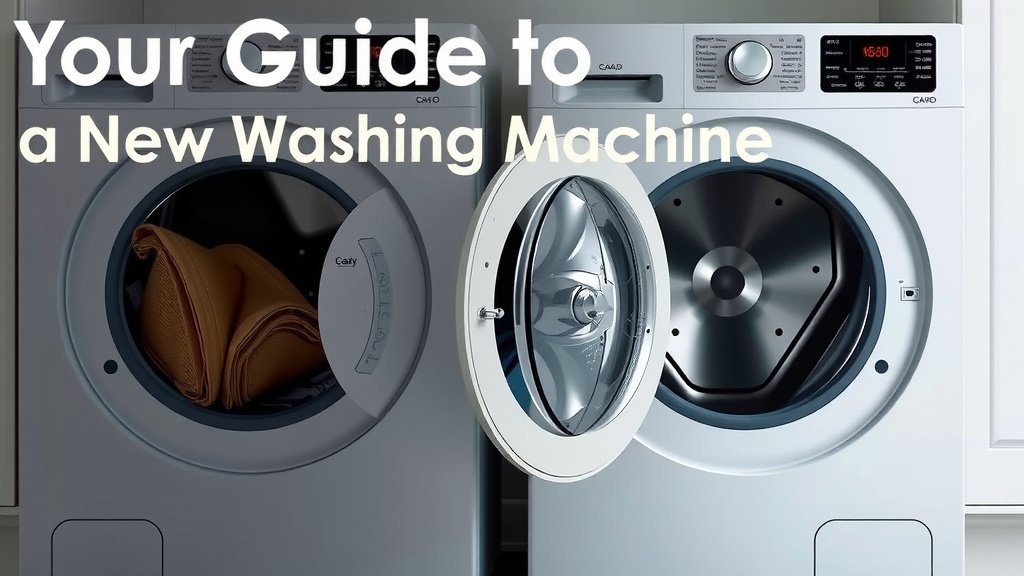
Your Guide to Buying a New Washing Machine
When buying a new washing machine, focus on capacity, energy efficiency, and your preferred wash cycle options. These factors directly impact performance and cost. Consider your household size and laundry habits to choose the right size. Look for ENERGY STAR certified models to save on utility bills. Different fabrics and soil levels benefit from specific cycles.
Beyond the basics, think about noise levels and available smart features. A quieter machine is a blessing for small homes. Smart features can offer convenience and better control. We found that comparing top-load versus front-load models is also important. Each has its own pros and cons regarding water usage and gentleness on clothes.
- Capacity: Match size to your family.
- Energy Efficiency: Look for ENERGY STAR.
- Wash Cycles: Pick based on fabric needs.
- Noise: Quieter is often better.
- Smart Features: Consider convenience.
Let’s walk through exactly what to look for to make sure you find the perfect washing machine for your home.
Choosing Your Next Washing Machine: Key Features to Consider
Finding the right washing machine can feel like a big decision. You want something that cleans well, saves you money, and doesn’t sound like a jet engine taking off. Let’s break down what really matters.
Understanding Washing Machine Types: Top-Load vs. Front-Load
The first big choice is between a top-load and a front-load washing machine. This choice impacts everything from water usage to how your clothes come out. We found that each type has its own benefits.
Top-Load Washing Machines
Top-loaders are often the familiar choice for many households. You lift the lid from the top to add clothes. They usually have an agitator, a central post that twists and turns clothes. Or, they might have an impeller, a low-profile cone or disc at the bottom that spins. These models tend to be easier to load and unload. You can also add forgotten items mid-cycle more easily.
Front-Load Washing Machines
Front-loaders have a door on the front. They tumble clothes through a small amount of water. Many experts say this tumbling action is gentler on fabrics. We’ve also seen research suggesting front-loaders are generally more energy and water-efficient than most top-loaders. They often have higher spin speeds, which means clothes come out drier, cutting down on dryer time.
| Feature | Top-Load (Agitator) | Top-Load (Impeller) | Front-Load |
|---|---|---|---|
| Water Usage | Higher | Moderate | Lower |
| Gentleness on Clothes | Less Gentle | More Gentle | Most Gentle |
| Cycle Time | Faster | Moderate | Slower |
| Ergonomics (Loading) | Easier to add items mid-cycle | Easier to add items mid-cycle | May require bending, harder to add items mid-cycle |
| Cost (Initial) | Generally Lower | Moderate | Generally Higher |
Capacity: How Much Laundry Do You Actually Do?
Think about your family size and how often you do laundry. This will help you pick the right capacity. A large family might need a bigger machine than a single person. We found that larger drums (e.g., 4.5 cubic feet or more) can handle bulky items like comforters. Smaller households might be fine with a capacity around 3.5 cubic feet.
Matching Capacity to Your Needs
If you do laundry only once or twice a week, a medium-sized machine should suffice. If you’re constantly running loads, consider a larger capacity. Remember, an overloaded machine doesn’t clean effectively. It also puts extra strain on the motor. So, don’t just go for the biggest; go for the best fit.
Energy Efficiency: Saving Money and the Planet
Washing machines use both water and electricity. Looking for ENERGY STAR certification is a smart move. These models meet strict energy efficiency guidelines set by the EPA. We found that ENERGY STAR certified machines use significantly less energy and water than standard models. This translates to lower utility bills over the life of the appliance.
Understanding the ENERGY STAR Label
When you see the ENERGY STAR label, you know the machine has been tested. It’s designed to perform well while minimizing environmental impact. Pay attention to the estimated annual energy cost and water usage. These figures are usually displayed on the yellow EnergyGuide label.
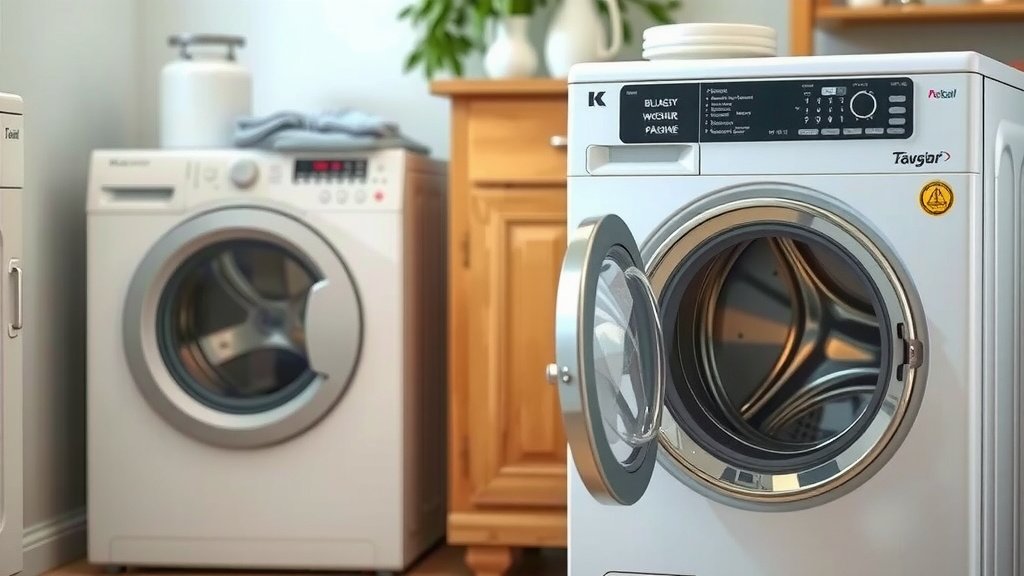
Wash Cycles and Features: Tailoring Your Laundry Experience
Modern washing machines come with a wide array of wash cycles. These are designed to handle different types of fabrics and soil levels. Having the right cycles can protect your clothes and get them cleaner.
Essential Wash Cycles
- Normal/Cotton: Good for everyday loads like shirts, jeans, and towels.
- Permanent Press: Uses medium agitation and a slower spin to reduce wrinkles.
- Delicates: Gentle cycle with low spin speeds for items like lingerie or silk.
- Heavy Duty: For heavily soiled items, uses more agitation and longer wash times.
- Quick Wash: For lightly soiled items or when you’re in a hurry.
Advanced Features to Consider
Beyond basic cycles, some machines offer special features. Options like steam cycles can help sanitize clothes or remove tough stains. Allergen cycles are great for people with sensitivities. We’ve seen that built-in water heaters can provide optimal temperatures for specific cycles. Some machines even connect to your Wi-Fi, letting you start, stop, or monitor cycles from your smartphone.
Noise Levels: A Quieter Home is a Happier Home
If your laundry room is near living areas or bedrooms, noise can be a major concern. Look for models that advertise quiet operation. Some manufacturers use special insulation or motor technology to reduce vibrations and sound. Reading reviews can be helpful here. Users often comment on how noisy or quiet a machine is during operation.
Your Washing Machine Shopping Checklist
To help you narrow down your options, keep this checklist handy:
- Confirm Capacity: Does it fit your household size?
- Check Efficiency: Is it ENERGY STAR certified?
- Review Cycles: Are there enough options for your laundry needs?
- Consider Noise: Does it have features for quiet operation?
- Budget for Features: Do smart features or steam matter to you?
- Read Reviews: What do other users say about performance and reliability?
Conclusion
You’ve learned that choosing a new washing machine involves more than just picking the cheapest option. You now understand how capacity, energy efficiency, and specific wash cycles directly impact your laundry routine and utility bills. We’ve seen that considering the type of machine, noise levels, and any desired smart features can lead to a more satisfying purchase. By using the checklist and focusing on these key areas, you can confidently select a washing machine that fits your household’s needs and budget for years to come.
Frequently Asked Questions
How do I know what washing machine capacity is right for my family?
Consider your household size and how often you do laundry. Larger families or those who do laundry less frequently might benefit from a higher capacity machine, around 4.5 cubic feet or more. Smaller households may find a capacity around 3.5 cubic feet is perfectly adequate.
Are front-load or top-load washing machines better for energy efficiency?
Generally, front-load washing machines are considered more energy and water-efficient. They use a tumbling action that requires less water and often have higher spin speeds, which can reduce drying time. Look for ENERGY STAR certified models in either type for guaranteed efficiency savings.
What are the most important wash cycles to look for?
Essential cycles include Normal/Cotton for everyday items, Permanent Press for wrinkle reduction, Delicates for sensitive fabrics, and Heavy Duty for tough stains. A Quick Wash cycle is also handy for lightly soiled items or when you’re in a hurry.
How can I ensure my new washing machine isn’t too loud?
Look for models that specifically advertise quiet operation. Some machines use advanced insulation or motor technology to minimize noise and vibrations. Reading user reviews is a great way to get real-world feedback on how noisy a machine actually is.
Are smart features on washing machines worth the extra cost?
Smart features like Wi-Fi connectivity can offer convenience, allowing you to control and monitor cycles from your smartphone. Whether they are worth the extra cost depends on your lifestyle and budget. Consider if you’ll truly use features like remote start or cycle notifications.
![7 Best Washer Dryer For Apartment [In 2026]](https://homeunderstandable.com/wp-content/uploads/2026/08/7-best-washer-dryer-for-apartment-in-2026-featured-768x432.jpg)
![7 Best Stackable Washer Dryer Reviews [In 2026]](https://homeunderstandable.com/wp-content/uploads/2026/09/7-best-stackable-washer-dryer-reviews-in-2026-featured-768x432.jpg)
![7 Best Washer Under $400 [In 2026]](https://homeunderstandable.com/wp-content/uploads/2026/08/7-best-washer-under-400-in-2026-featured-768x432.jpg)